Tour description
For many, Andalusia is Spain’s most fascinating region – a place where Eastern and Western cultures meet within Europe. Following in the footsteps of the Moors, you will visit unique historic cities – many of them World Heritage Sites: Seville with its mighty cathedral, Cordoba with its impressive Mezquita and Granada with its famous Alhambra. In between lies a wealth of dazzling white villages, unspoilt landscapes, sweeping beaches and endless olive groves. You will also discover the flavours of southern Spain: Wonderful tapas, excellent wine and high-quality olive oil will delight your palate. And last but not least: Let yourself be swept away by fiery flamenco – a pure expression of the Spanish zest for life! As you can see: This trip is a real treat for all the senses. And the crowning glory: You will stay in grand, historic Paradores – some of the most beautiful hotels in Andalusia. A perfect combination of culture and luxury!
Itinerary
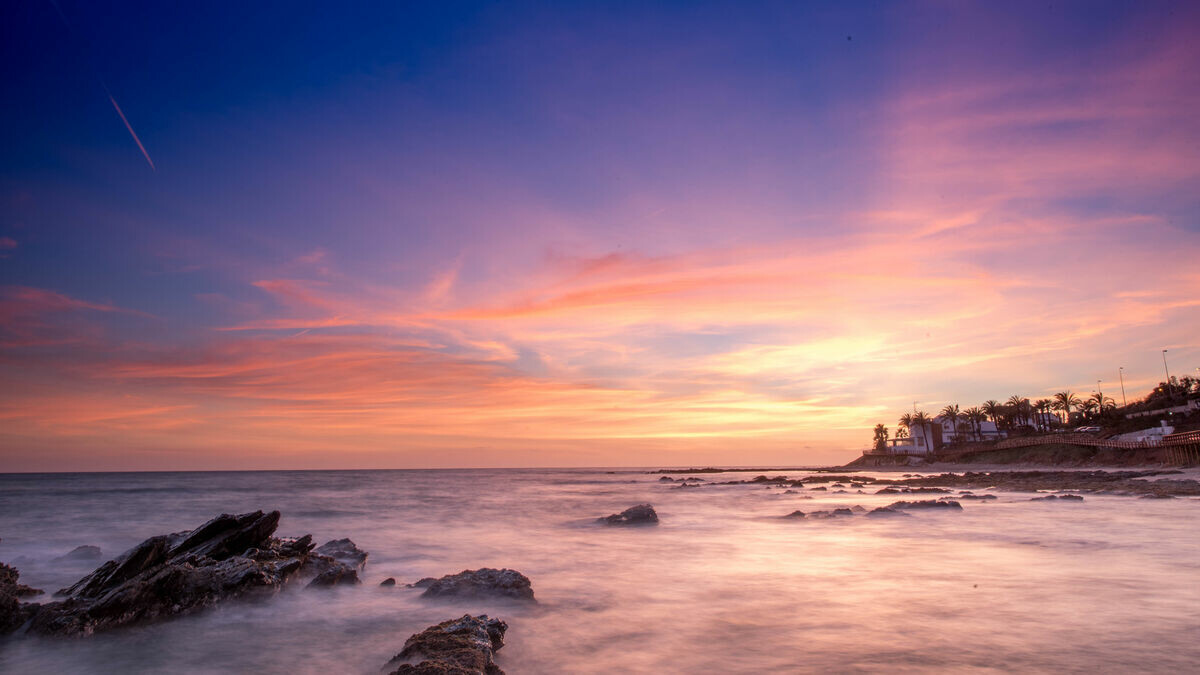
Fly to Malaga – a warm welcome to Andalusia! Transfer to your first hotel – situated just outside Malaga, right by the sea beside a fine white sandy beach. Take your time to settle in and enjoy the amenities of your modern Parador before your first evening meal.
Overnight stay at the Parador in Malaga.
The provincial capital Malaga, inhabited by different cultures for over 2.000 years, is today a modern city with a rich heritage. Watched over by Gibralfaro Castle, lively and bustling Malaga unfolds below, with countless charming spots such as the Alameda Principal and the La Farola seafront promenade. As well as being the capital of the Costa del Sol, Malaga is one of Spain's leading tourist destinations thanks to its mild climate, beaches and unrivalled selection of golf courses. The city is also known as Picasso's birthplace. Opportunity to visit the Picasso Museum (optional). It is housed in a Renaissance palace dating from century 16. Here you can admire original, representative works – 233 in total – from every period and stage of the artist's career.
Your next destination is Marbella. Here you can get a taste of the jet-set lifestyle with a stroll along the waterfront promenade. The elegant shops tempt you to browse for leather goods and fashion. The marina at Puerto Banus is a must-see if you want to join in the conversation!
Then continue towards the Sierra de Ronda. This beautiful mountain landscape is dotted with typical white villages. Ronda is one of these gems! Here you visit a wine bodega – with a tasting included, of course (optional).
Overnight stay at the Parador in Ronda.
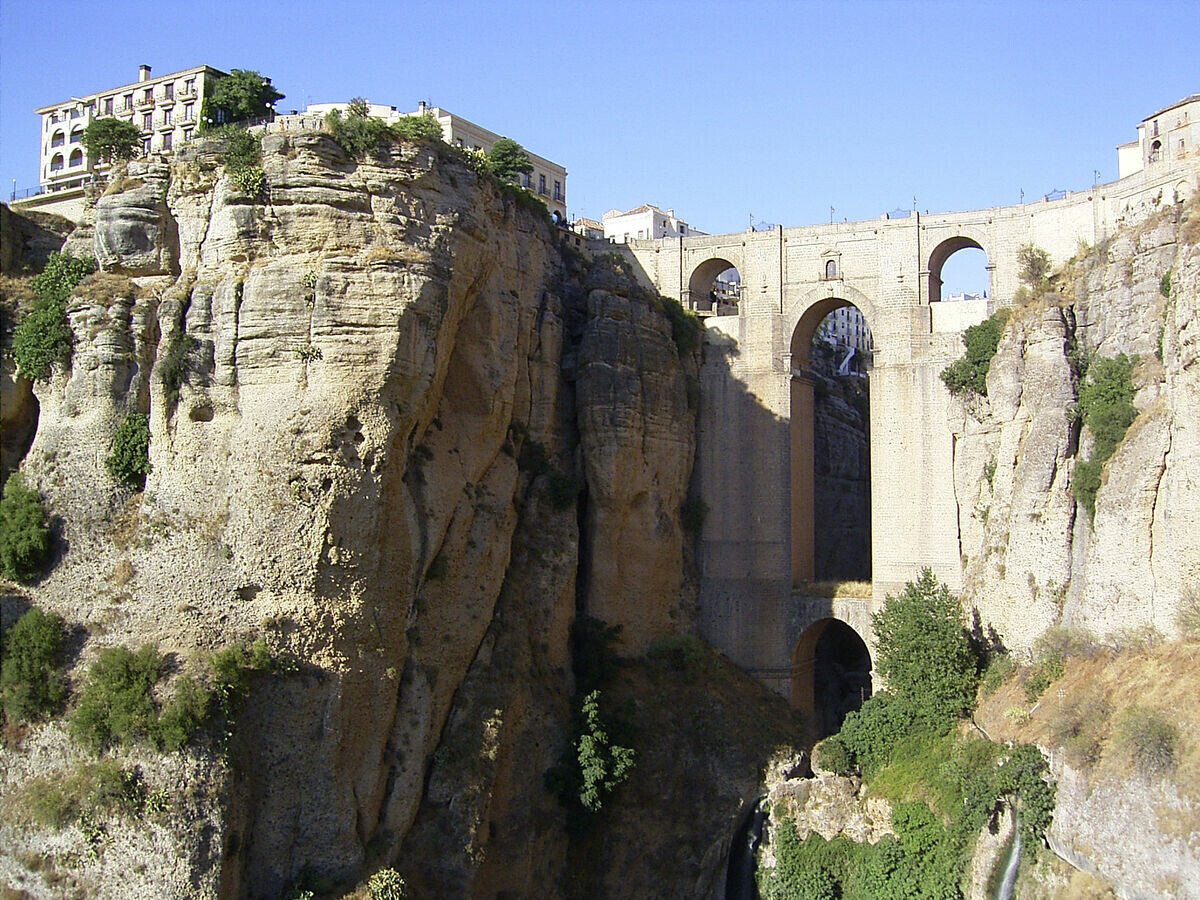
Today you explore Ronda, perched dizzyingly above a 150 m deep gorge, with its historic old town, the collegiate church of Santa Maria la Mayor and Spain's second-oldest bullring. Ronda was home to the bullfighting dynasty of Francisco, Jose, Juan and Pedro Romero, who developed the rules of bullfighting in centuries 18 and 19. Ronda is also home to the Don Bosco House (optional). Built at the beginning of century 20 as a luxurious Art Nouveau residence with a large garden for a wealthy family, it still impresses today with its spacious courtyard and exquisite furnishings. Its garden offers breathtaking panoramic views of Ronda's bridge and the surrounding countryside.
Continue to Carmona, one of the oldest settlements in Andalusia. The Romans and Moors made it a political and economic centre of their respective empires. Even after its conquest by the Christians in 1247, it remained an important town, as its centre clearly reveals. There is sure to be time today to enjoy the amenities of your beautiful Parador. Relax in its lovely garden, for example, and take in the views over the Guadalquivir plain. Enjoy delicious coffee and cake against this unique backdrop and soak up the special atmosphere!
Overnight stay at the Parador in Carmona.
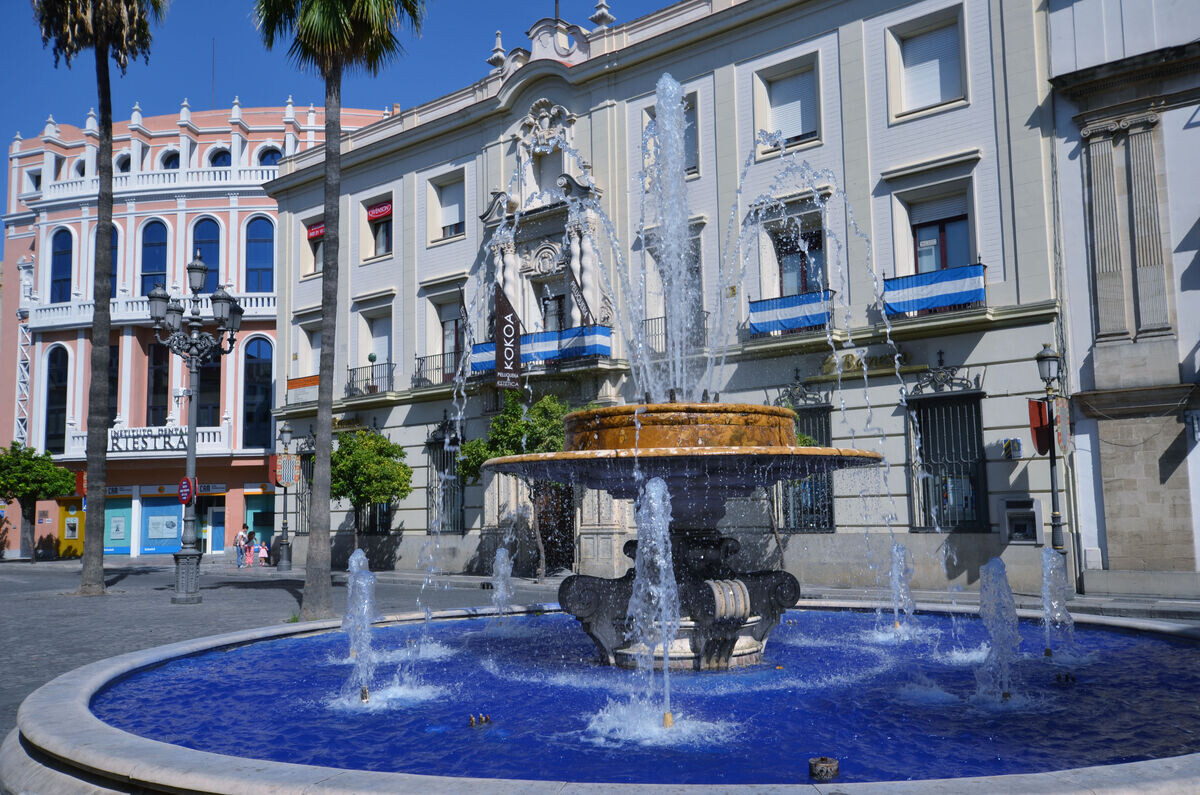
Excursion to the Andalusian capital, Seville. A wealth of impressive historic monuments, such as the cathedral, which houses the tomb of Columbus, and the Alcázar, the palace of the Moorish and later Christian kings, shape Seville's historic character. Discover more about this beautiful city on a guided tour. You will also visit the "Centro Ceramica" in the historic Triana district. Housed in an old factory whose production facilities are still preserved today, it bears witness to the great importance of ceramic art to Seville and aims to introduce locals and visitors to its traditions and history. Azulejos in particular, the brightly painted and glazed ceramic tiles, are typical of this art form and a distinctive feature of the streetscape in Seville and throughout the country.
Opportunity to have lunch at a traditional local restaurant in Seville's old town (optional).
Afterwards, depending on how much time you have, you can explore a little more of Seville at your own pace. Browse the many boutiques along the Calle Sierpes shopping street, for example. Or enjoy Seville from the River Guadalquivir. An optional boat trip takes you under historic bridges, giving you time to admire the city's most famous sights. How about a flamenco show in the evening (optional)? At the Palacio Andaluz, which dates from the 20th century and is one of Seville's most popular flamenco venues, with excellent acoustics, you can immerse yourself in this Andalusian tradition of song and dance. Delicious tapas are served alongside the performance to round off the experience.
Overnight stay at the Parador in Carmona.
Today you continue to Cordoba. The former centre of the Arab caliphate is Andalusia's most important city after Seville. Its Moorish character is particularly evident on a stroll through the winding lanes and small squares of the picturesque old town. The main attraction, however, is the Mosque-Cathedral, the former mosque. The route through the cathedral takes you through a "forest" of over 850 freestanding columns, which seem to shift as your perspective changes. Alongside the cathedral, the Jewish quarter also adds to the city's charm. And of course Cordoba is also home to the Alcazar – an impressive palace complex dating from century 14, with beautiful Arab baths and Roman mosaics.
Then continue to Jaen. The city and the province of the same name are characterised by seemingly endless olive groves and are synonymous with olive oil production.
Overnight stay at the Parador in Jaen.
Today you will first travel to Baeza and Ubeda. These twin towns, just 10 km apart, enjoyed their heyday in the 16th century and boast an impressive number of magnificent Renaissance buildings. Baeza has over 50 palaces from this period, and Ubeda even more, which is why both towns were awarded UNESCO World Heritage status. Admire the impressive residences, manor houses and churches and be transported back to times long past.
The region is known for its olive groves. You will see how olive oil is made and sample this liquid gold.
Back at your hotel, you can relax for a while before dinner. How about a dip in the outdoor pool (open seasonally)?
Overnight stay at the Parador in Jaen.
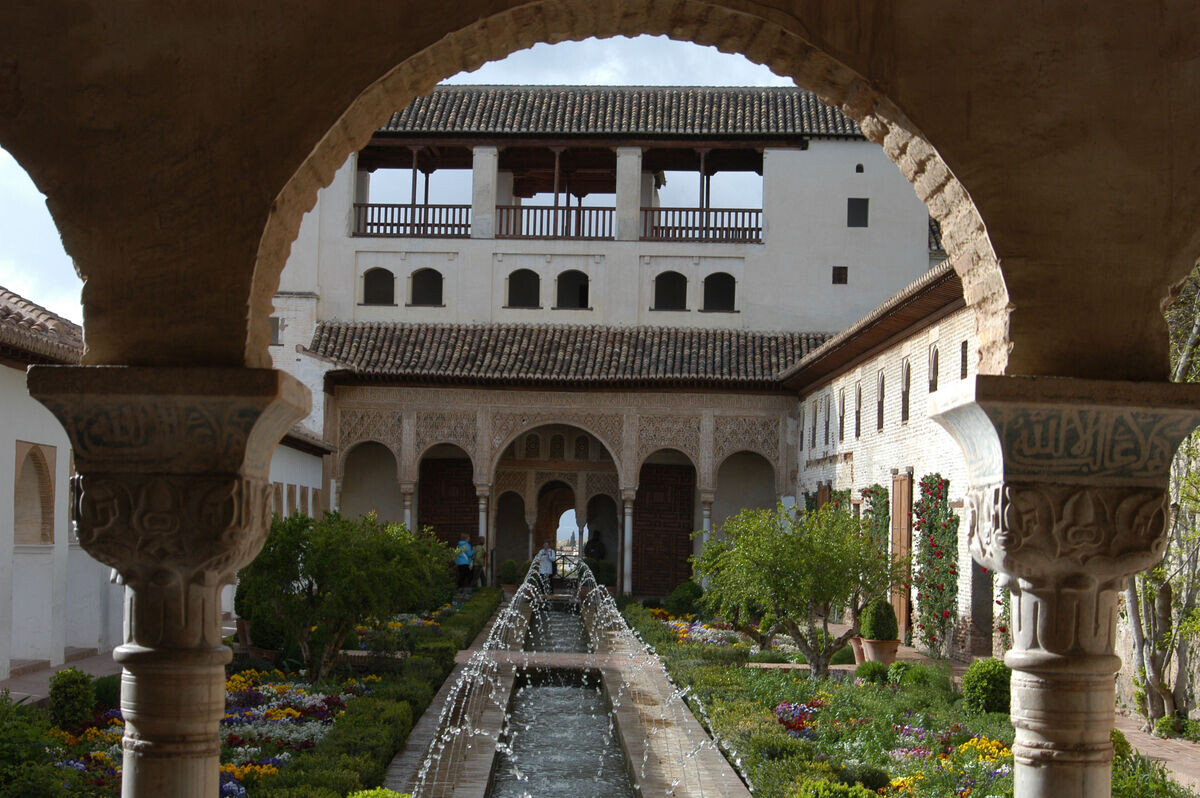
Your journey continues to Granada. This vibrant city and splendid seat of Moorish kings is one of Spain's most beautiful cities. Crowned by the unique Alhambra Palace, Granada has been declared a national monument – in recognition of its many well-preserved remnants of a rich and distinctive culture and artistic heritage, but also as the setting for an eventful history. Alongside the "Red Castle" of the Alhambra, Granada is also known for the Generalife, whose charm lies in its beautiful gardens with terraces and stairways – a perfect example of Arab garden design. The Palace of Charles V, a Renaissance building and the first grand palace of the Spanish kings, has a two-storey colonnade with Doric columns below and Ionic columns above. A stroll through the city centre/old town reveals the city's hidden corners.
Travel to Antequera. The Antequera Dolmens Site (open only until 15 on Sundays, closed on Mondays) has been a UNESCO World Heritage Site since 2016 and is among the most significant examples of megalithic architecture in Europe. The monuments of Menga and Viera, for example, were built during the Neolithic period from huge stone blocks weighing several tonnes and bear witness to a long-lost cultural tradition dating back more than 5000 years – a true marvel of their time. The structures served as burial chambers, and their location and shape point to an important ritual connection with nature.
Depending on your departure time, you may still have a little time to enjoy your Parador and reflect on the past week. Transfer to Malaga Airport. With plenty of new memories to take home, you board your return flight. Until next time in Andalusia!
Supplement for fewer than 25 people
Planned Parador hotels
Parador de Malaga Golf: Charming hotel with an Andalusian atmosphere, sea views and direct beach access.
Parador de Ronda: In the town's former town hall, spectacularly perched on a cliff overlooking the Ronda gorge.
Parador de Carmona: Impressive hotel in an old Moorish fortress high above the town – stunning views guaranteed!
Parador de Jaen: This Parador sits on a hill above the city in a restored castle with historic vaulted ceilings and wooden beams.
Parador de Antequera: For the final night, a modern Parador that breaks with the tradition of historic buildings.
Minimum number of participants: 16
Departure airports
With a reputable airline from many German airports, some subject to a supplement. Taxes/fees/surcharges may vary depending on the departure airport. Departures from Austria and Switzerland on request.
Included services
- 1 x overnight stay including buffet breakfast
- 6 x overnight stay with half board
- Half board with a 3-course evening meal or buffet
- Hotels in the SRG Premium and upper SRG Premium categories
- 1 drink with dinner included per day (1 glass of wine or 1 beer or 1 soft drink or 1/2 l mineral water)
- Economy Class flight with a reputable airline (connecting flight possible)
- Germany – Malaga
- Malaga – Germany
- incl. all taxes, fees and surcharges (as of 05/2026)
- Tour by air-conditioned coach as per itinerary
- Tour escort throughout, from/to Malaga Airport
- 1 x 3 hour guided city tour of Malaga
- 1 x 2,5 hour guided city tour of Ronda
- Admission to Ronda bullring
- 1 x coffee and cake at Parador Carmona
- 1 x 3 hr guided city tour of Seville
- 1 x Visit to a ceramics workshop in Seville
- 1 x Admission to Seville Cathedral
- 1 x 2 hr guided walking tour of Cordoba
- 1 x Admission to the Mezquita in Cordoba
- 1 x Tour of an olive oil farm in Baena incl. 4-course lunch
- 1 x 2,5-hour guided tour of the Alhambra & Generalife in Granada (admission extra)
- Visit to the Antequera Dolmens (free admission)
When to travel
When is the best time to visit Spain?
Spain has a varied climate. Spring and autumn are pleasant in many cities and southern regions, while the Mediterranean coast is popular in summer. Northern Spain and mountain regions have different seasonal conditions.
| Travel experience | JJan | FFeb | MMar | AApr | MMay | JJun | JJul | AAug | SSep | OOct | NNov | DDec |
|---|---|---|---|---|---|---|---|---|---|---|---|---|
| Cultural trips and city breaks | – | – | suitable | suitable | suitable | suitable | – | – | suitable | suitable | suitable | – |
| Tours of Andalusia | – | – | suitable | suitable | suitable | – | – | – | suitable | suitable | suitable | – |
| Mediterranean coast | – | – | – | – | suitable | suitable | suitable | suitable | suitable | suitable | – | – |
| Balearic Islands | – | – | – | suitable | suitable | suitable | suitable | suitable | suitable | suitable | – | – |
| Northern Spain | – | – | – | – | suitable | suitable | suitable | suitable | suitable | – | – | – |
| Nature and walking holidays | – | – | – | suitable | suitable | suitable | – | – | suitable | suitable | – | – |
| Winter city breaks | suitable | suitable | – | – | – | – | – | – | – | – | suitable | suitable |
General guidance by region and type of holiday, not a guarantee of weather, dates or availability. For walking holidays, take altitude and local conditions into account; winter city breaks promise neither snow nor specific temperatures. Find out more about Spain