Tour description
A journey along the Lycian coast is more than a holiday – it is an immersion in millennia of myths, cultures and Mediterranean joie de vivre. Your boat glides gently through the reed beds of Dalyan, past the mysterious rock tombs of the Lycians. The deep blue sea accompanies you onwards on a full-day excursion to Rhodes, where the ancient and medieval worlds meet the easy-going Greek way of life. On the rugged Datça peninsula, olive groves, little coves and traditional village life blend into an oasis of tranquillity. Bodrum reveals its splendour, with Eastern history and modern flair embracing one another. In Euromos and Didyma, you stand in awe before towering columns, while the oracle of Apollo tells of the beliefs and hopes of bygone times. The legendary Temple of Artemis and magnificent Ephesus bring antiquity to life – with marble streets, theatre stages and the faint echo of past empires. This tour is a mosaic of light, history and emotion – an invitation to discover the soul of Asia Minor with all your senses.
Itinerary
Flight from your booked departure airport to Dalaman via Istanbul. On arrival, meet your tour guide and transfer to your hotel in the Dalyan area.
Travel to Dalyan. Boat trip to the Lycian city of Kaunos. Visit the ancient city and the impressive temple-shaped Lycian rock tombs in Kaunos. A characteristic feature of Dalyan is the Lycian rock tombs on the opposite bank of the reed-lined river delta. They cling to the mountainside high above the town. The tombs date from between the 6 and 4 centuries BC and, with their columns, resemble the façades of Greek temples. Continue by boat through the reed-lined waterways to the famous Iztuzu Beach, a nesting ground for Caretta-Caretta turtles. In the late afternoon you reach the town of Marmaris.
Day trip to the island of Rhodes. The high-speed ferry takes us to Mandraki in just 50 minutes, where, according to legend, the Colossus of Rhodes once stood – one of the Seven Wonders of the World. The medieval old town begins directly behind the harbour: Byzantine walls, imposing gates, the Street of the Knights, the Palace of the Grand Master, churches, mosques, a hammam and many other reminders of an eventful history. Return to Marmaris.
A day trip through the stunning scenery of the Datça Peninsula. On a clear day, the Greek islands of Rhodes and Symi can be seen from the tip of the Datça Peninsula. In a unique setting, the ancient city of Knidos awaits us at the end of our short walk. Knidos is the home of the Aphrodite of Knidos. From the 4 century BC onwards, Knidos grew into a flourishing metropolis. As one of the most important settlements in the Mediterranean, it helped found the Doric League. The renowned sculptors Scopas and Bryaxis, who also worked on the Mausoleum at Halicarnassus, were commissioned to create cult statues for the temples of Knidos. Around 340, the city acquired the famous nude statue of Aphrodite created by Praxiteles. This statue of the goddess of love became so famous that people came from far and wide to see it, bringing an influx of tourists even in ancient times. An extensive tour of this ancient Carian city takes in public buildings and sites such as the Agora, Temple of Apollo, Temple of Aphrodite, theatre and harbour.
Travel to Bodrum, ancient Halicarnassus. In antiquity, it was a city of great importance, counting famous figures such as the historian Herodotus among its sons and a wonder of the world, the Mausoleum of the governor Mausolus, among its buildings. Until 30 years ago, it was an obscure fishing village. Today, it is a popular holiday resort for wealthy Turks. Sightseeing in Bodrum, including the Castle of the Knights of St John with its famous Museum of Underwater Archaeology and the Mausoleum at Halicarnassus. Today you leave Bodrum and head north to the neighbouring ancient city of Euromos. A few kilometres from the district town of Milas, on the road towards Lake Bafa, the Temple of Zeus at Euromos lies hidden among olive trees. A stop here is well worthwhile. Half of the original 32 Corinthian columns are still standing, making the temple one of the best-preserved religious buildings in the country. They were apparently donated in century 2 AD by private individuals, mostly wealthy Roman officials, who immortalised their names on them as benefactors. The temple dates from Roman times and was dedicated to Zeus Lepsynos. Check in to your hotel in the Didyma area for one night.
Today you devote the day to three remarkable sites in Ionia. Didyma, with its magnificent oracle of Apollo, second in importance only to Delphi, housed in the largest Hellenistic temple complex in Asia Minor. German archaeologists revealed that, compared with the Temple of Apollo at Didyma, the Parthenon on the Acropolis in Athens would have fitted entirely inside it. Miletus: The ancient city of Miletus was once home to famous men and the cradle of Western philosophy. Thales of Miletus worked here, as did Anaximander and Anaximenes, Hippodamus and many others. Priene: Priene was called a »Greek Pompeii« by German archaeologists, who uncovered all its public buildings and over 50 houses here - a unique achievement for a Classical-Hellenistic city. Along with Thales of Miletus, Bias of Priene was one of the universally recognised Seven Sages. Continue to Kusadası and check into your hotel for two nights.
A visit to the Temple of Artemis, one of the Seven Wonders of the Ancient World, is a highlight of our trip. Although only a few column fragments remain today as reminders of its former splendour, this place has a special presence: A sanctuary once stood here that was larger than many temples in Greece and whose fame spread throughout the ancient world. A visit to the Ephesus Museum is the ideal complement to our tour of the ancient city. Many of the most significant finds from Ephesus are now displayed in the museum – carefully restored and impressively presented; including the famous “Artemis statues”, symbols of the city and its religious tradition.
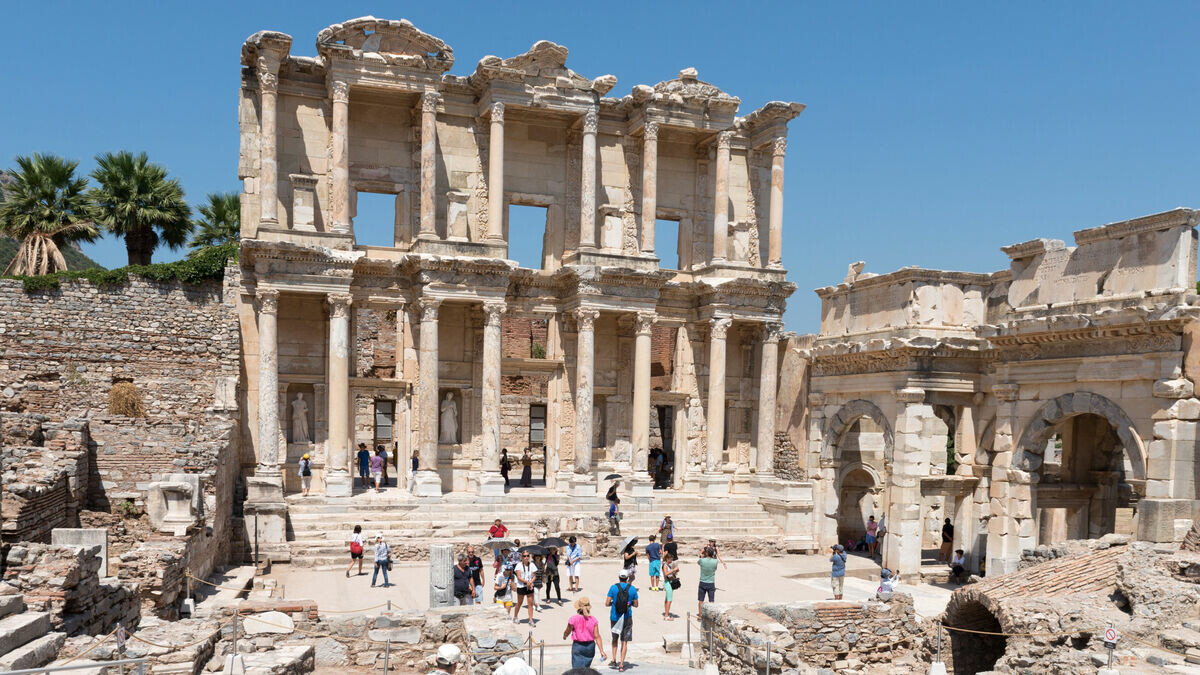
Finally, a visit to the ancient city of Ephesus. Even as a non-expert, you feel as though Ephesus is still a living city, a feeling that few ancient cities can offer today! Heraclitus lived and worked here ("It is impossible to step into the same river twice", c. 520 - 460 BC). The Apostle Paul spent a long time in Ephesus. The first letter in the Book of Revelation was sent to the church in Ephesus. The Third Ecumenical Council took place in Ephesus in 431 AD. An extensive tour of Ephesus and its surroundings awaits us. Afterwards, return to your hotel.
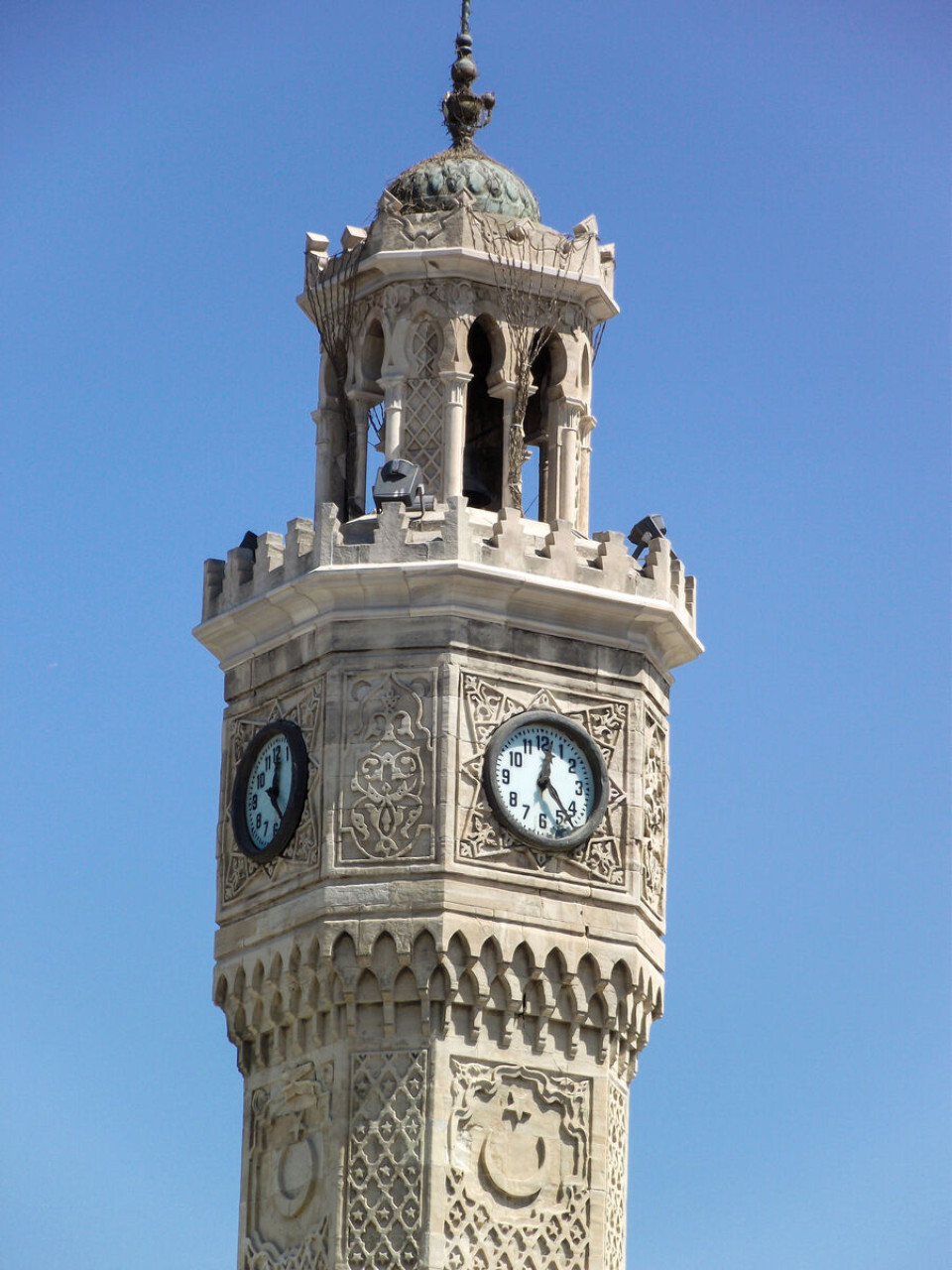
Travel to Izmir; ancient Smyrna. Depending on the departure time, we begin today with a city tour to explore the home of Homer, author of the Iliad and the Odyssey. Transfer to Izmir Airport.
Departure airports
With a reputable airline from many German airports, some at a supplement. Taxes/fees may vary depending on the departure airport. Departures from Austria and Switzerland on request.
Supplement for fewer than 25 people
Minimum participants: 16
Included services
- 7 x overnight stay with half board
- Half board with a 3-course evening meal or buffet
- Hotels in the SRG Premium category
- Flight with a reputable airline in Economy Class (connecting flight possible))
- Germany – Dalaman
- Izmir – Germany
- incl. all taxes, fees and surcharges (as of 05/2026)
- 1 piece of luggage
- Tour in a modern, air-conditioned coach as per itinerary
- Tour guide throughout, from Dalaman Airport to Izmir Airport
- Hotel gratuities package
- Admission fees as per itinerary
- Boat trip to Kaunos
- Ancient city of Kaunos
- 1 x day trip to Rhodes incl. tour guide, admission fees, all transfers, ferry
- Admission to the Palace of the Grand Master in Rhodes
- Admission to the Ancient City of Knidos
- Admission to the Tomb of King Mausolus
- Admission to the Castle of the Knights of St John in Bodrum
- Admission to the Ancient City of Euromos
- Admission to the oracle sanctuary of Didyma
- Admission to the ancient city of Miletus
- Admission to the Ancient City of Priene
- Admission to the ancient city of Ephesus
- Admission to the Ephesus Museum
- Temple of Artemis in Ephesus