Tour description
Itinerary
The DFDS ferry departs from Amsterdam/IJmuiden for Newcastle in the early evening. Overnight on board.
Disembark in Newcastle in the morning. You travel along the famous Hadrian's Wall, which was built by the Romans in century 2 and stretches for around 120 km from England's east coast to its west coast. It was once an imposing structure built from stone blocks and served as a frontier fortification to protect the Roman province of Britannia from attacks from the north. Today, Hadrian's Wall is a major tourist attraction and a UNESCO World Heritage Site – a fascinating relic of England's Roman history and a treasured monument to Roman architecture and engineering. You cross the border into Scotland and reach Cairnryan, where you board the ferry to Northern Ireland in the afternoon.
In the morning, a guided tour of Belfast (optional). The capital of Northern Ireland has always been a bustling centre of trade, shipbuilding and industry. It was here that the famous Titanic was launched in 1912. The shipyard where the ship was built is now home to the fascinating Titanic Museum. Between Portrush and Ballycastle, a highlight of the Antrim Coast awaits you: the hexagonal basalt columns of the Giant's Causeway, formed from solidified lava. The Giant's Causeway is a fascinating natural wonder on the north coast of Northern Ireland. It is a formation of around 40.000 hexagonal basalt columns rising out of the sea to create a unique landscape. The columns are the result of volcanic activity that took place around 60 million years ago. Legend has it that the giant Finn McCool built the columns to reach Scotland and challenge another giant. Whatever the truth of this story, the Giant's Causeway is an impressive example of the power and beauty of nature and a UNESCO World Heritage Site. There are many walking trails along the cliffs and coast, offering spectacular views of the sea and the columns. For those who would like to learn more about the geological processes behind the formation of the Giant's Causeway, there is a visitor centre with interactive exhibitions and guided tours. The Giant's Causeway is a must for anyone visiting Northern Ireland and offers an unforgettable experience for nature lovers. Not to be missed: A photo stop at the imposing ruins of Dunluce Castle or, with a short detour, at the Dark Hedges, the Kingsroad from Game of Thrones.
A scenic tour introduces you to the captivating landscapes of County Donegal. Glenveagh National Park is an impressive nature reserve in County Donegal in north-west Ireland. Covering more than 16.000 hectares, the park encompasses mountains, lakes, valleys and forests and offers breathtaking views of the landscape. Glenveagh Castle stands on a small island in the middle of Lough Veagh (optional admission payable locally, subject to availability). The castle was built in the 19 century in the Scottish style and is surrounded by beautiful gardens.
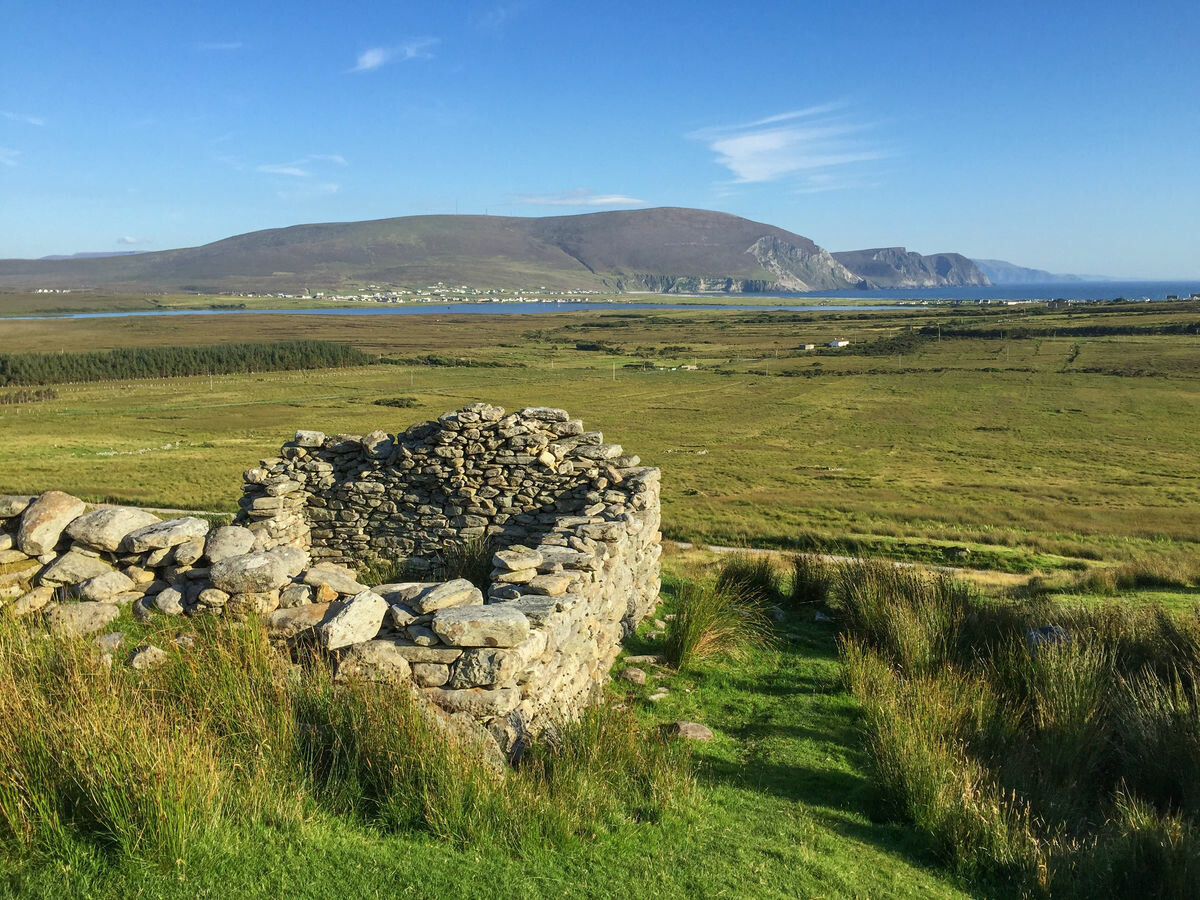
Passing Westport and Ireland's holy mountain, Croagh Patrick, the journey takes you to Connemara, one of the most unspoilt and fascinating regions on Ireland's west coast. Here, a landscape of wild beauty unfolds: rugged coastlines meet gently rolling green hills, interspersed with sparkling lakes, vast stretches of moorland and narrow stone walls winding through the countryside. The ever-changing light and expansive skies lend Connemara an almost mystical atmosphere that immediately captivates visitors.
Connemara National Park is particularly impressive, with mountains, bogs and lakes combining to create a rugged yet tranquil natural landscape. Walking trails lead through heathland and valleys, revealing spectacular views along the way. The region’s landmark is the distinctive „Twelve Bens“ mountain range, which rises dramatically from the landscape and symbolises the wild spirit of Connemara.
An optional visit to Kylemore Abbey is available, picturesquely situated on the shores of a lake amid an impressive landscape of mountains and woodland. This neo-Gothic castle dating from century 19 is one of Ireland’s best-known attractions, enchanting visitors above all with its romantic setting and lovingly tended gardens.
You then continue to Galway. This vibrant university city on the Atlantic coast welcomes you with colourful façades, small shops, street musicians and a wealth of pubs and restaurants. Here, Irish joie de vivre, culture and history come together to provide a memorable end to this varied day.
Located on Ireland’s west coast in County Clare, the Burren region covers around 250 square kilometres and impresses with its unique karst landscape. Bare limestone expanses, mysterious caves and a mixture of wild nature and historic sites define the scenery. The name „Burren“ is thought to derive from the Gaelic word „Boireann“, meaning „stony land“.
Yet the Burren is much more than just stone and rock. The region boasts exceptional biodiversity: rare orchids and other remarkable plants thrive amid the sparse landscape, while a variety of rare animals have also made their home in this rugged terrain. Dolmens, megalithic tombs and ruins from Roman, medieval and monastic times bear witness to thousands of years of human settlement.
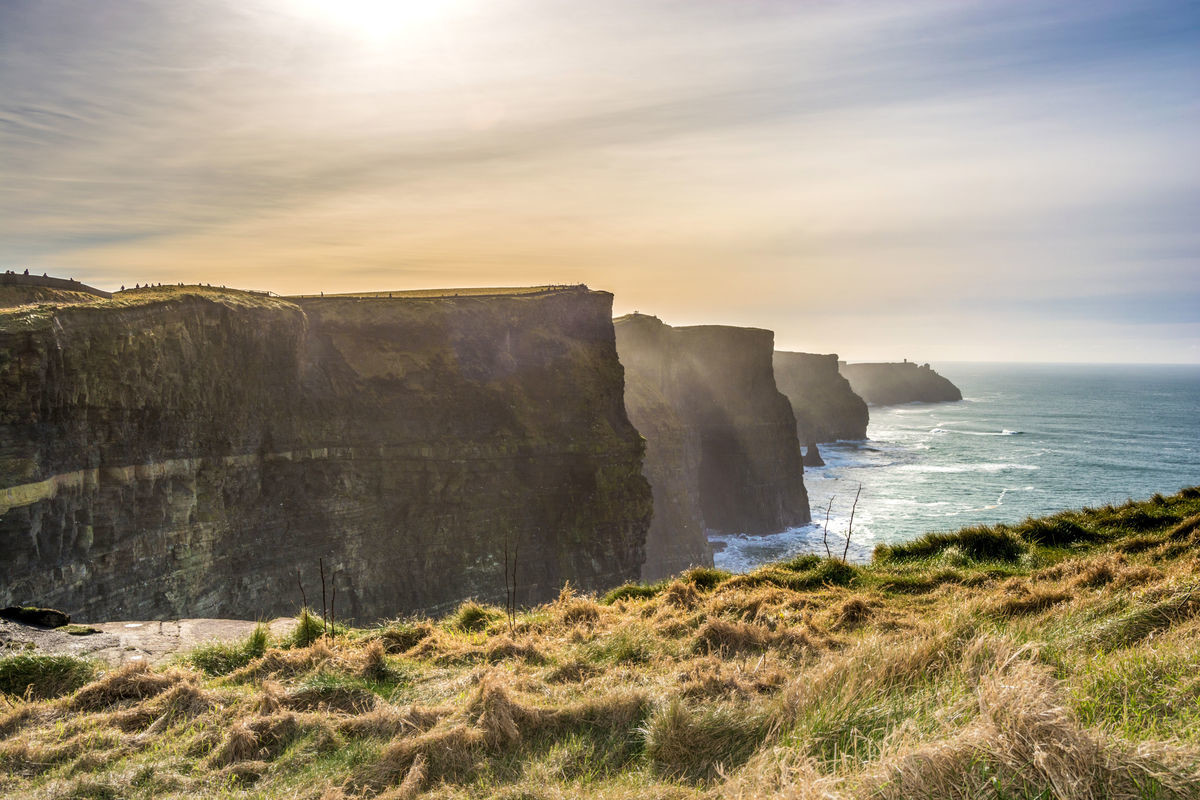
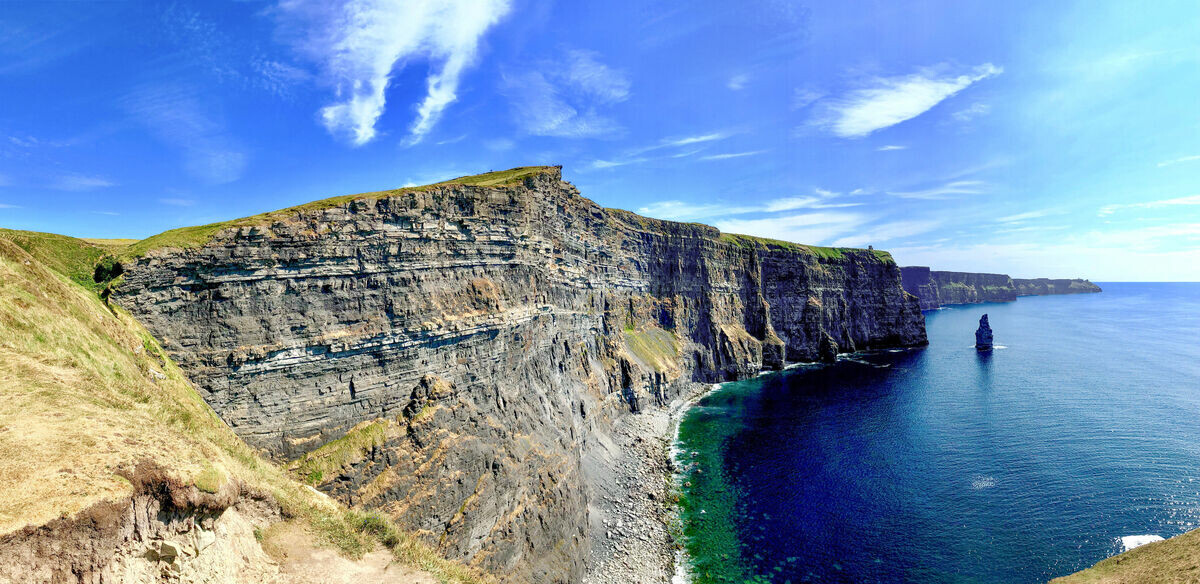
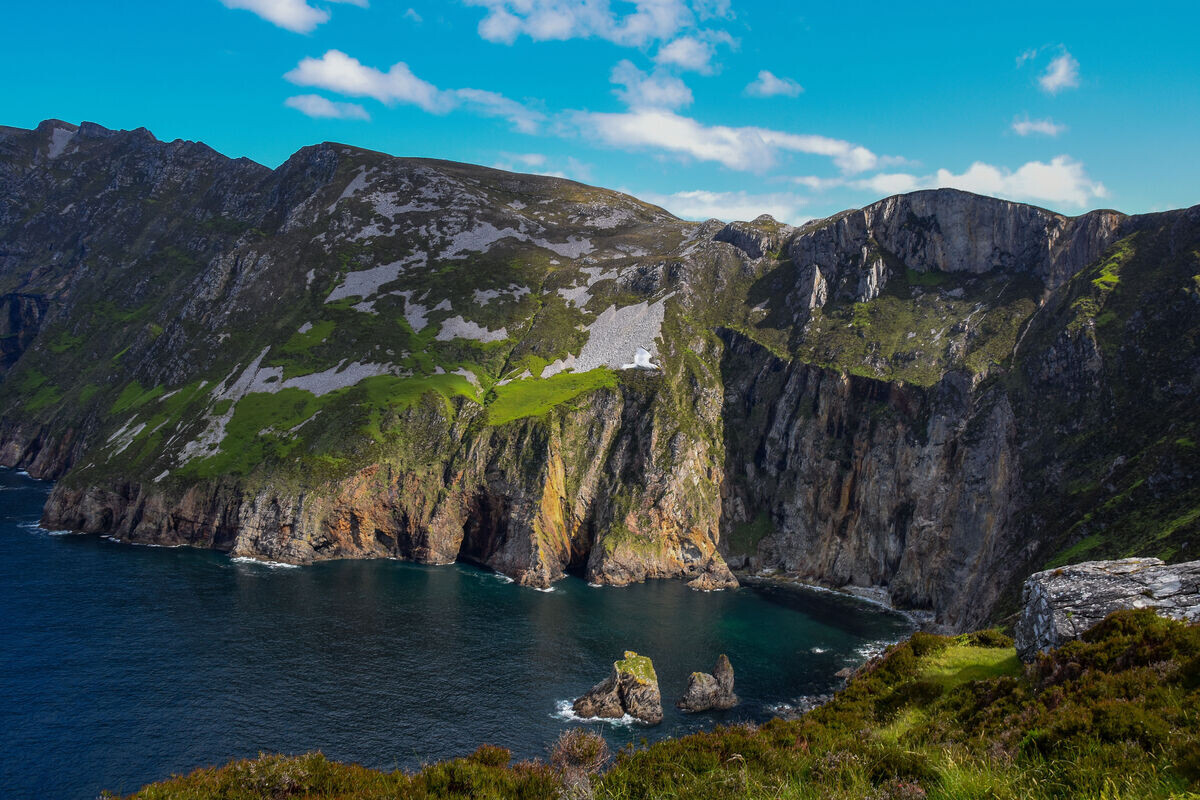
The world-famous Cliffs of Moher are Ireland’s most iconic postcard image. Plunging steeply into the sea, the cliffs offer breathtaking views across the Atlantic and Galway Bay and rank among Ireland’s most spectacular natural settings. Here you can feel the raw power of nature and the vastness of the ocean – an experience you will not soon forget. Further south, just before Limerick, lies the small village of Bunratty with its castle and open-air museum (optional).
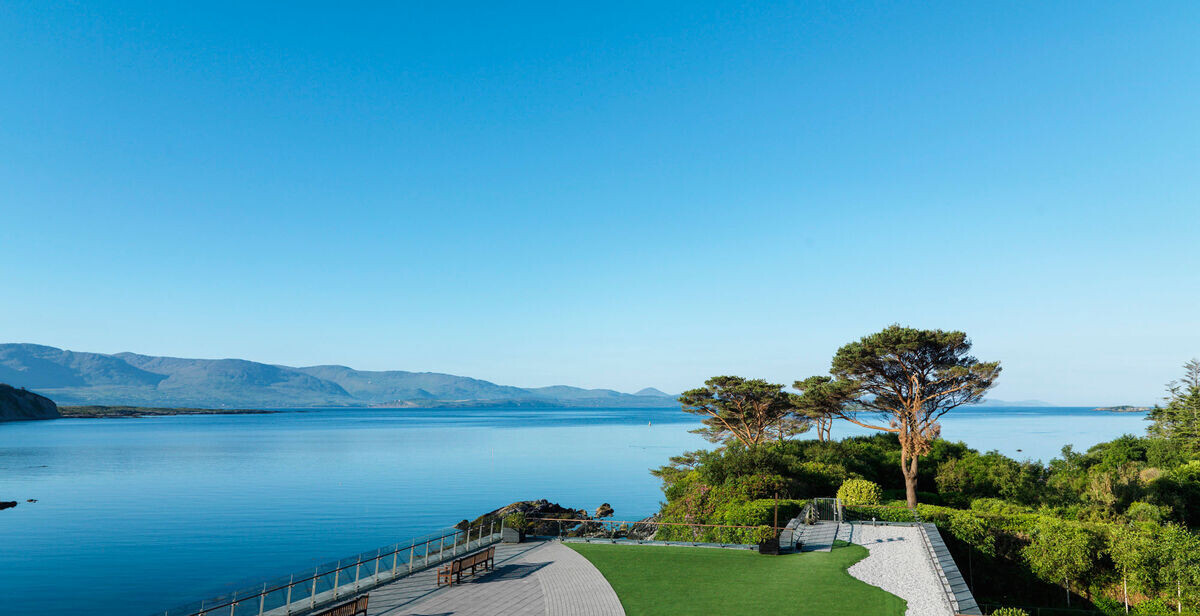
Be captivated by the beautiful scenic drive known as the "Ring of Kerry". This picturesque coastal road around the Iveragh Peninsula winds through spectacular landscapes, including mountains, lakes, bays and beaches, as well as charming villages and historic sites. Highlights along the Ring of Kerry include Killarney National Park, the villages, lakes and Kenmare, the impressive Torc Waterfall and the famous Ladies View viewpoint.
Enjoy magnificent views on both sides of the route, rugged natural beauty and a striking coastal landscape. Muckross House is an impressive Victorian mansion in Killarney National Park in County Kerry, Ireland. The house was built in 1843 and served as a summer residence for the Herbert family. The estate boasts a variety of magnificent rooms, including a dining room, a music room and a drawing room, all furnished in Victorian style. The rooms are filled with original furniture and works of art, offering visitors an insight into the lives of wealthy Irish society in the 19 century. The gardens surrounding Muckross House (optional) are renowned for their diverse plants and glorious floral displays.
Visit Blarney Castle and kiss the Blarney Stone (optional). Legend has it that doing so bestows the gift of eloquence. The port town of Cobh, with its colourful terraced houses, is also well worth a visit. The former White Star Line ticket office now houses the Titanic Experience (optional). The museum displays recovered artefacts and brings to life the tragic story of the passengers aboard the ship of dreams. But the Titanic was not the only ship to depart from here. Many tears of farewell were shed at Ireland’s most important transatlantic port, so be sure to visit the monument to Annie Moore and her brothers. Annie was the first immigrant to pass through the terminal on Ellis Island in New York. Overnight stay in the Waterford/Wexford area.
The Wicklow Mountains are a dream landscape. Green hilltops, some shaped like sugarloaves, alternate with bogs, heathland and lakes. This picturesque mountain range in the east of the country covers an area of more than 500 square kilometres and offers a variety of landscapes, from vast moorlands to picturesque lakes and waterfalls. The mountains are also rich in wildlife and plant life and are home to some rare species such as the dwarf lily and the hedgehog. The area also has a rich historical and archaeological heritage, including ancient tombs and stone circles. At its heart lies the monastic site of Glendalough (optional). Glendalough also has a long history, dating back to century 6, when St. Kevin, an Irish saint, founded a hermitage in the area. The ruins of the monastic settlement built by St. Kevin and his monks can still be seen and attract many visitors. Dublin is a lively city full of history and culture. It is known for its friendly locals, picturesque streets and vibrant music scene. Dublin also offers a wealth of attractions, including the famous Trinity College, St. Patrick's Cathedral and the Guinness Storehouse.
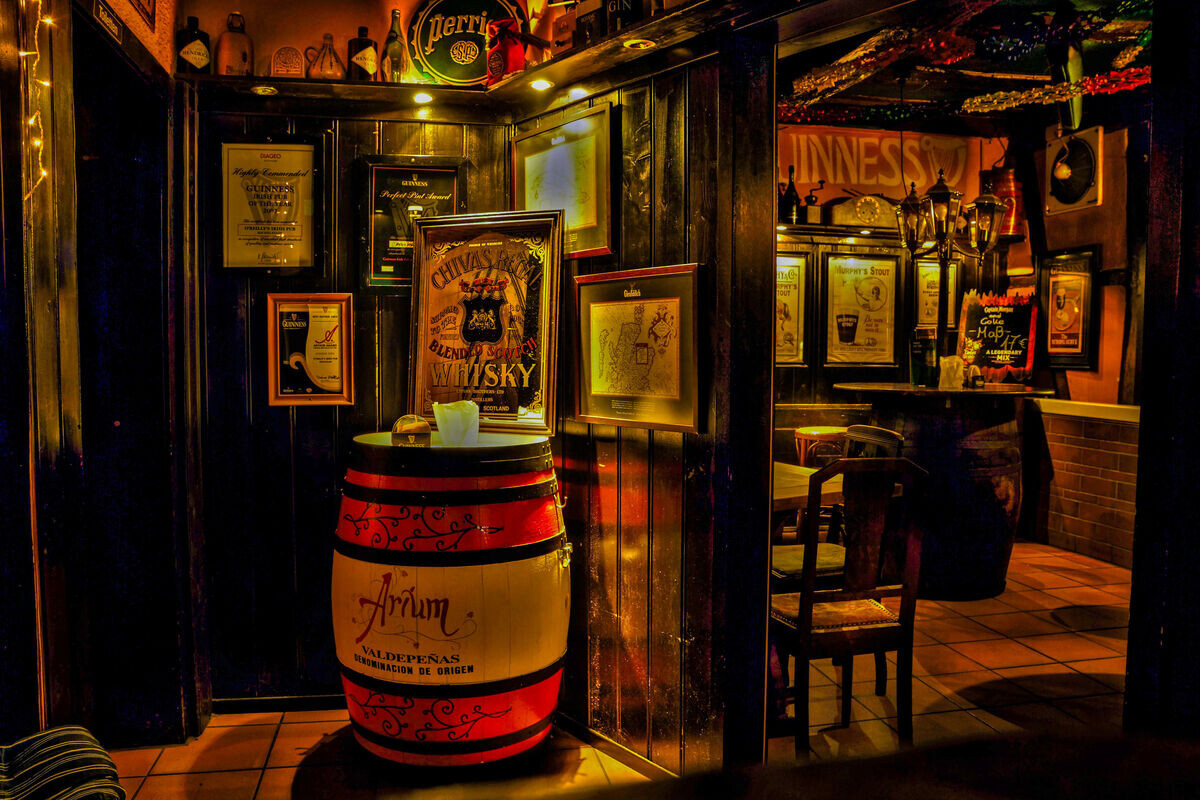
In Dublin, you will explore the city's various neighbourhoods on a guided tour, including Temple Bar, known for its pubs and nightlife. You should also visit Phoenix Park, one of Europe's largest urban parks. Dublin is also an important centre for literature and art, as the home of some of the most famous writers and poets, such as James Joyce and W.B. Yeats. The city has numerous art galleries and museums, including the National Museum of Ireland and the Irish Museum of Modern Art. You should not leave without trying an Irish whiskey, which the Irish naturally claim is the best in the world.
In the morning, you leave the Emerald Isle with plenty of memories. You reach Hull and set sail in the evening on one of the P&O ferries.
Disembarkation in the morning and journey home.
Included services
- Ferry crossings:
- Amsterdam – Newcastle for coach and passengers
- Half board on board
- Accommodation in 2-berth cabins
- Dinner and breakfast -
- Cairnryan – Larne for coach and passengers
- Dublin – Holyhead for coach and passengers
- Hull – Rotterdam for coach and passengers
- Buffet breakfast on board
- Accommodation in 2-berth cabins
- 8 x overnight stay with half board
- 7 x Irish breakfast/breakfast buffet
- 1 x breakfast pack on the final morning at the hotel in Dublin
- Half board with a 3-course evening meal or buffet
- Good mid-range and upper-mid-range hotels according to the SRG classification
- 1 x admission to the Giant's Causeway exhibition
- 1 x admission to the Cliffs of Moher visitor centre incl. parking fees
- 1 x 3-hour guided city tour of Dublin