Tour description
Three UNESCO World Heritage Sites, hundreds of millions of years of geological history and five thousand years of human history – on the most beautiful stretches of the King Charles III England Coast Path, which, at 4.328 km, is the world's longest national coastal walking trail, following the English coast. Walk paths that most people never get to see: different with every kilometre, breathtaking with every kilometre – and full of hidden gems you won't find on any other itinerary. We have walked many of these paths ourselves. We know what awaits you – and we know why we would keep coming back too.
White cliffs plunging over a hundred metres into the sea. Fossils that have lain among the pebbles for millions of years until you pick them up. Ruins that seem to hover above the Atlantic. Stone circles older than any story we know. And to finish, a gin from an ancient mill that is now home to Bombay Sapphire.
This trip is for anyone who never thought walking was their thing – and anyone who always knew it was. It is for those who want to experience something they will not find in every brochure. And it is for those who want to come home with not just photos, but stories to tell.
Itinerary
You can see them from on board – the white chalk cliffs rising high above the harbour, as if to tell every visitor: Yes, you have arrived, and yes, it is as beautiful as promised. So your first steps on English soil take you to the famous White Cliffs of Dover – an experience that could hardly have a more spectacular setting. From the National Trust Visitor Centre in Langdon, a broad path leads gently uphill, then you pass through a simple wooden gate and suddenly the English Channel stretches out before you in all its vastness. Here, the famous chalk cliffs plunge over a hundred metres into the sea – dazzlingly white and almost unreal in their beauty. Down in the harbour, you can see the ferries, while Dover Castle stands guard over the coast. On a clear day, the French coast is visible on the horizon, barely 34 kilometres away. Continental Europe within touching distance and the perfect spot for your first group photo.
Depending on your arrival time, continue east from here along the King Charles III England Coast Path. Around Langdon Hole – a broad, bowl-shaped hollow offering breathtaking views of the sheer chalk cliffs and the deep bay below, some of the finest photo opportunities await. At Fan Bay, where the cliffs plunge particularly dramatically into the sea, there is a network of underground tunnels from the Second World War – a quiet reminder that this coast has not always been simply beautiful (no guided tour – historic gun emplacements above ground only). After a little over an hour of leisurely walking – with breaks, photo stops and the occasional awestruck gaze into the distance – South Foreland Lighthouse appears on the horizon. Built in 1843, it has a remarkable history: From here, in 1899, Guglielmo Marconi sent the first international wireless radio message – a moment that changed the world of communication forever. Turn back in good time, as a delicious dinner awaits you at your hotel.
Today's walk starts at Beachy Head, the highest chalk cliff on England's south coast. 162 metres below stands the tiny-looking red-and-white striped lighthouse – from up here it looks like a toy. A spectacular start to the day. The path now heads west along the cliff edge, and after about a kilometre you reach Belle Tout, an old lighthouse that once stood so close to the edge that it was simply moved inland. Then you continue – up and down, following the coast, with ever-changing views of the sea. After about 1,5 to 2 hours you reach Birling Gap. If you like, you can descend the 50 steps to the shingle beach (depending on the tides, the wooden staircase may be closed). Here you suddenly find yourself right in front of the white cliffs of the Seven Sisters, towering high above you. It is a completely different view from the one above – wilder, more imposing, more immediate.
After a break – the National Trust Café is the perfect place for it – you continue, this time over the Seven Sisters.
Seven chalk cliff peaks, one after another. A series of ups and downs, with climbs and views, descents and anticipation of the next summit. At Brass Point, roughly halfway along the route, you are rewarded with the finest view of the entire walk – back over the peaks you have already climbed and ahead to those still to come, with the sparkling sea at your feet. After about 2 more hours, the final crest reveals Cuckmere Valley, a green river valley winding gently inland. One final short stretch follows the river to the Seven Sisters Country Park Visitor Centre in Exceat, where the coach is already waiting. Brighton is London by the sea – lively, open-minded, a little eccentric and very lovable. Anyone with enough energy left can enjoy the beach and its famous pier after a delicious dinner.
Our tip: Plan an extra photo stop. The classic postcard view – all seven cliff peaks lined up together – can be captured from Seaford Head, west of Cuckmere Haven. A fantastic group photo looking back at all seven cliff peaks you have just conquered.
Today is all about culture: Spend the morning in Brighton. We would be happy to book a guided city tour or admission to the Royal Pavilion for you (both optional). Then head west. The next stop is Arundel (optional, closed on Mondays). Nestled in the rolling hills of the South Downs and set on the picturesque River Arun, the historic market town of Arundel welcomes visitors with a scene straight out of an English picture book. Georgian and Victorian façades line the charming High Street – shaped over the centuries by the noble Howard family, the Dukes of Norfolk, whose majestic castle still dominates the town's skyline. Arundel Castle is one of England's most important historic castles, with almost 1.000 years of history. The extensive castle gardens – with the Stumpery, the Collector Earl's Garden and the historic glasshouses – invite you to enjoy a leisurely stroll. The Norman keep and the chapel are also well worth a visit. (The magnificent castle interiors only open from 12:00 each day).
For those who would still like to go walking, the alternative is the Isle of Purbeck – a peninsula just beyond Bournemouth that feels untouched by time. The walk starts in Studland, a small village just behind the dunes. From here, you first head to the cliff edge. Enjoy the views of Old Harry Rocks, three mighty chalk formations rising white and pristine from the shimmering blue water, across Poole Bay and towards the Isle of Wight. It is one of England’s quiet natural wonders – less well known, but no less impressive. The walk continues south to Swanage, with sea views all the way, following the King Charles III England Coast Path throughout.
The Jurassic Coast, one of England’s most spectacular natural sights, has been a UNESCO World Heritage Site since 2001. Its distinctive layered cliffs, lying like open books in the landscape, tell the story of 185 million years – and nowhere is there a more beautiful place to read it than here. The first stop is, of course, Durdle Door, a mighty limestone arch rising from the sea like nature’s own triumphal arch. It is rightly one of the most photographed sights in England. The climb is steep, but short. From here, you head west along the cliff edge to Lulworth Cove – arguably the most beautiful bay in the entire Jurassic Coast UNESCO World Heritage Site – almost perfectly circular and an otherworldly blue-green.
Afterwards, a visit to the Charmouth Heritage Coast Centre is well worth it – free, informative and staffed by friendly people who offer valuable advice on fossil hunting. Timing is important: If the tides are right, a short walk along the beach to look for fossils is the perfect warm-up before the hike – and an absolute highlight for many. Anyone who finds something they are allowed to take home will never forget it. The beach is world-famous among fossil collectors and is considered one of the richest fossil sites in Europe. In the shingle ridges right along the strandline lie gleaming golden ammonites, pointed belemnites and occasionally even fragments of bone from prehistoric marine reptiles – simply lying there, freely accessible and free to collect. Keep your eyes peeled and you can find history, touch it and take it home (in small quantities) – perfectly legally.
The walk then starts in the picturesque fishing village of Beer – a place where fishing boats still rest on the shingle beach and the Anchor Inn has been at the heart of village life for generations. From here, you head west, high above Lyme Bay to the striking chalk cliffs of Beer Head. At the top, you are rewarded with one of East Devon’s finest views. After about a kilometre, one of the most mysterious places on this coast unfolds before you: the Hooken Undercliffs – a vast natural haven shaped by nature on its own terms over centuries. The result is a wild, wooded labyrinth of chalk formations, hidden paths and lush vegetation that feels like a forgotten world. You walk through light and shade, past oddly shaped limestone pillars and the exposed entrance to an ancient quarry.
At the end of the path, the valley opens up: Branscombe, said to be England’s longest village. Look for the anchor of the MSC Napoli on the beach – a silent relic of the dramatic grounding in 2007, when hundreds of onlookers looted containers washed ashore and images of people pushing motorbikes through the surf went around the world. The return route follows the clifftop path back to Beer – with sweeping views over the Jurassic Coast.
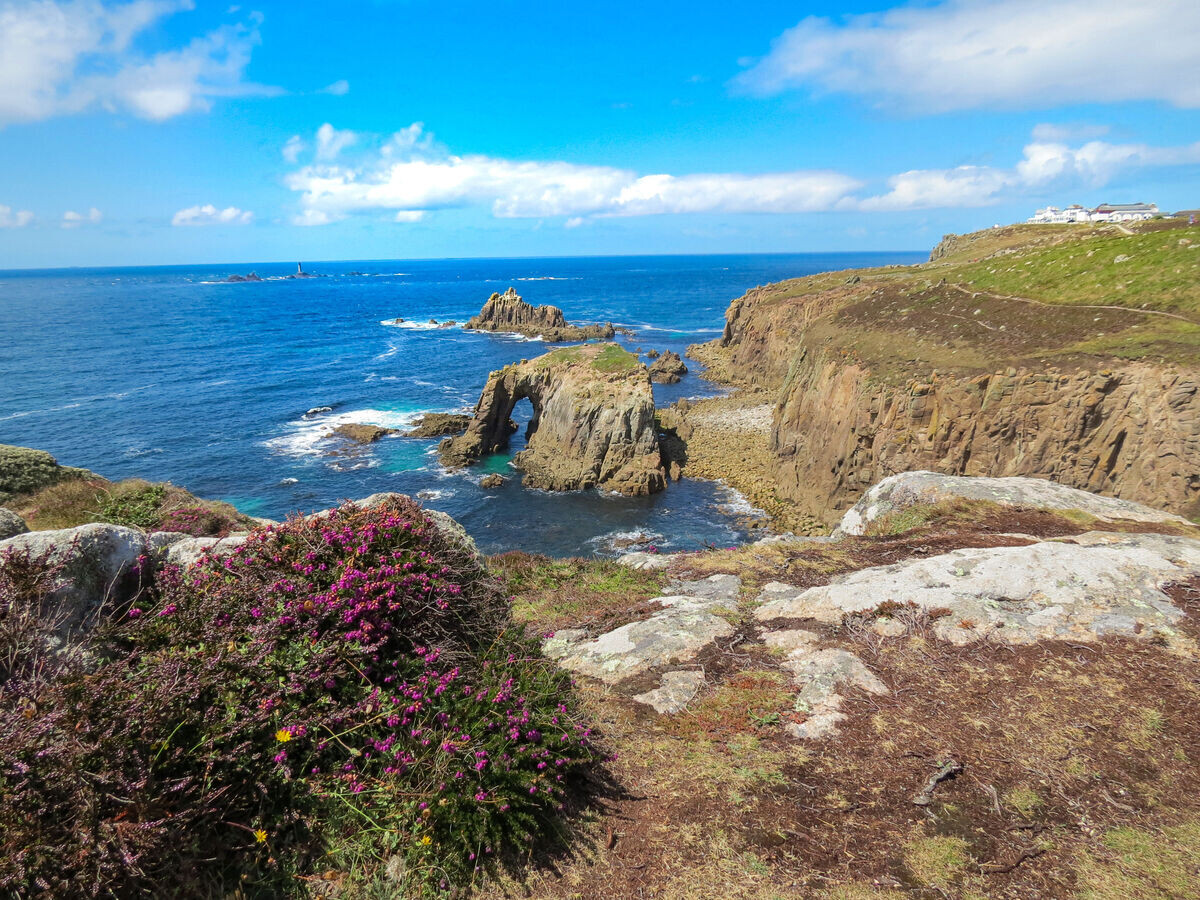
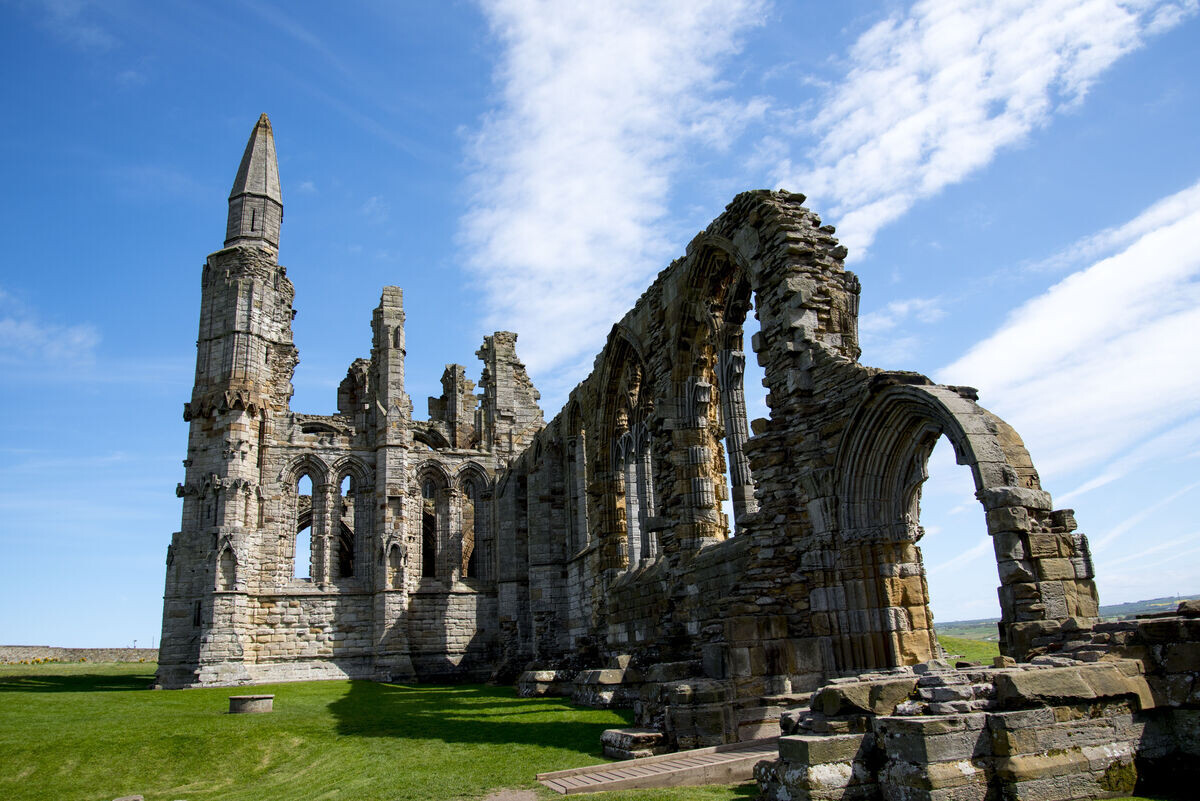
Welcome to the Tin Coast, the heart of Cornwall’s mining region, now part of the Cornwall and West Devon Mining Landscape UNESCO World Heritage Site. From Cape Cornwall, the route takes you right past the Botallack Engine Houses – two picturesque and atmospheric ruins that embody the daring of Cornwall’s miners like nowhere else in England. The engine houses cling to the cliffs, seemingly suspended above the sea and lashed by spray. Below them, deep in the rock, mine tunnels stretched far beneath the seabed. Through the heart of the mining district and past traces of its industrial history, you reach Levant Mine, home to a restored, working steam engine dating from the 19 century – the only working example of its kind left in Cornwall. The grounds and coastal path are freely accessible and impressive in their own right.
After about three hours of walking, you reach Geevor. The Geevor Tin Mine Museum is one of Cornwall’s most important surviving tin mines – it remained in operation until 1990 and tells the story of Cornish mining in an authentic, unvarnished way. You can explore the surface buildings, take a look inside the mine tunnels (optional) and experience mining history first-hand. Winner of the Tripadvisor 2026 Travellers’ Choice Award, this is an authentic, rugged and atmospheric place – one that suddenly gives a deeper context to everything you have seen on your walk.
Depending on your energy levels and how much time you have, there are two lovely options for the afternoon:
Enjoy some free time in the artists’ haven of St Ives, one of England’s best-known coastal towns – a blend of seaside resort and arts scene with a lovely atmosphere. The narrow cobbled lanes of the old town lead to the picturesque harbour, where colourful fishing boats bob on the water and seagulls circle overhead. All around are little galleries, cafés and shops selling Cornish crafts. Perhaps try a Cornish Pasty or a Cornish Cream Tea. Remember, jam first then Clotted Cream on top! Alternatively: Your hotel has a spa and wellness area, just the thing after a long day’s walking. Unwind in the heated indoor pool, soothe tired muscles in the aromatherapy steam room, or book a massage if you fancy – from a simple back massage to a full-body treatment.
This day has plenty in store. A brief photo stop at the Bedruthan Steps. From the National Trust car park at Carnewas, it is just a few steps to the viewpoint. Huge sea stacks rise from the sand, washed by the Atlantic at high tide, standing like gigantic sculptures on the beach at low tide. This is utterly unique in England – a sight that leaves you speechless. Then it is on to Tintagel – Cornwall’s most mythical place. Nobody knows whether King Arthur really lived here – but you immediately understand why people dreamed up legends in this place. Your walking route leads straight past the ruins of Tintagel Castle to Barras Nose, a narrow headland with sweeping sea views in every direction. Then Rocky Valley appears – a narrow, green gorge where a small stream tumbles over rocks into the sea, peaceful and unexpectedly beautiful. After around 3 hours of walking, the final bend reveals Boscastle – a deep, narrow natural harbour nestled in a green gorge. Continue to Bristol.
After a week of coastline, cliffs and Atlantic breezes, England bids you farewell today with a completely different face. The coach leaves Bristol in the morning and heads into the gently rolling hills of Wiltshire.
Photo stop in Lacock. The village belongs entirely to the National Trust and is so immaculately preserved that not a single modern street lamp or power cable on the façades disturbs its medieval appearance. The narrow lanes with their stone and half-timbered houses look so authentic that the BBC and Hollywood film here – e.g. scenes from Pride and Prejudice, Downton Abbey and Harry Potter.
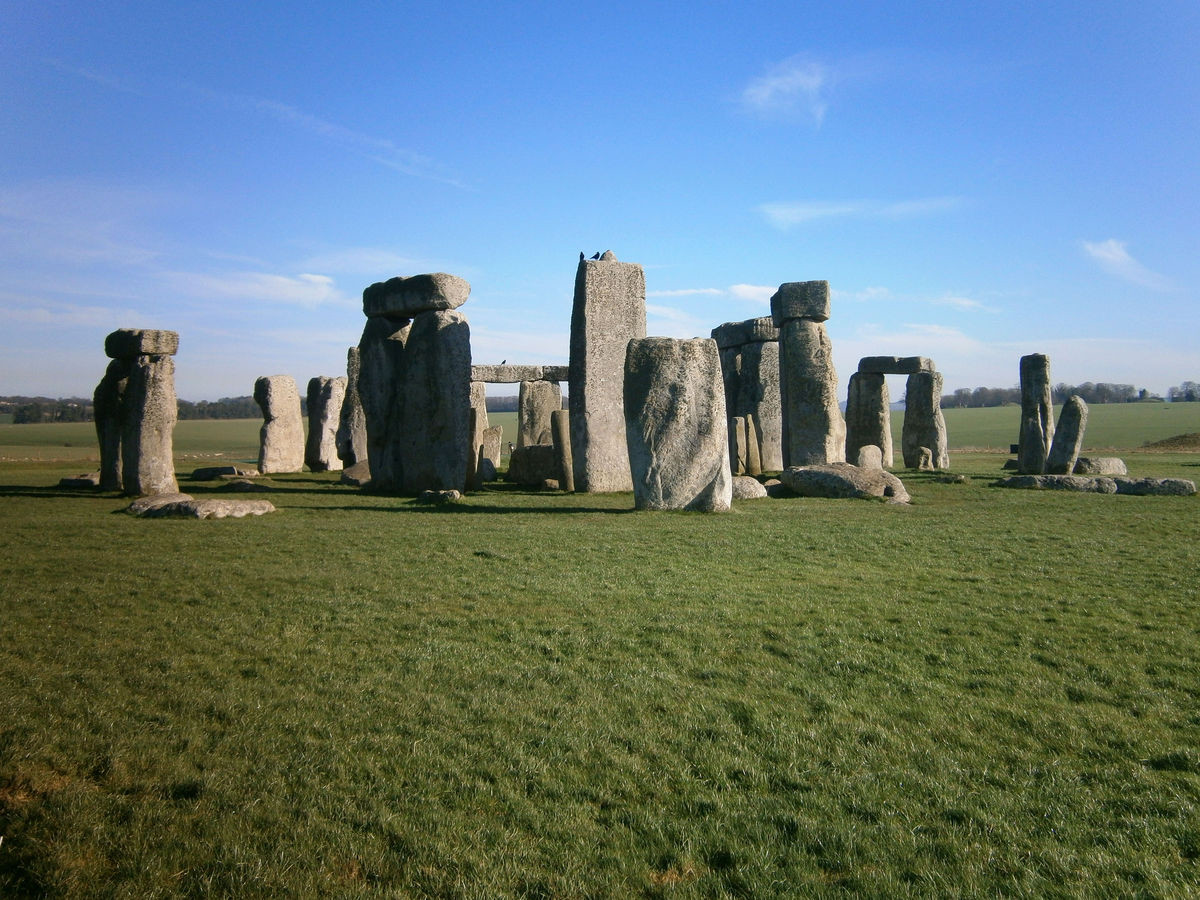
The highlight of the day is Avebury, the largest prehistoric stone circle in the world – so large that you practically drive right through it. You can touch the stones, walk around them, sit among them and soak up the mystique that could already be felt here 5000 years ago.
Can you suddenly smell juniper? Then you have arrived at Bombay Sapphire (optional). Today, the historic Laverstoke Mill is all about gin. Bacardi bought the site, restored it and transformed it into one of England's most beautiful distilleries. Historic brick buildings meet modern glasshouses, where the gin's 10 botanicals thrive under controlled conditions. The result is known around the world – the unmistakable blue bottle, named after the Star of Bombay, a rare blue star sapphire from Ceylon, now on display at the Smithsonian.
If there was no opportunity on the outward journey, your final steps on English soil should take you to the famous White Cliffs of Dover – a farewell experience that could hardly be more perfectly staged. No hike – just the perfect spot for a farewell photo on your way to the ferry. The bags are packed, but the images remain. White cliffs, seven peaks, mysterious ancient walls – and somewhere between Dover and Bristol, a group trip became a shared story. The journey home is a time for memories.
Route profile:
White Cliffs of Dover → South Foreland Lighthouse and back
Distance: approx. 6 km (there and back)
⬈ 210m // ⬊ 210m
Duration: approx. 1,5-2 hrs.
Difficulty: easy
Drop off and pick up: White Cliffs of Dover Visitor Centre
Beachy Head → Seven Sisters
Distance: approx. 10 km
⬈ 110m // ⬊ 260m
Duration: approx. 3-3,5 hrs.
Difficulty: moderate
Drop off and pick up: Beachy Head main car park → Seven Sisters Country Park Visitor Centre in Exceat (overflow car park)
Old Harry Rocks → Swanage
Length: approx. 8-8,5 km
⬈ 100m // ⬊ 100m
Duration: approx. 2,5 hrs.
Difficulty: easy
Drop off and pick up: Knoll Beach Car Park → Main Beach Long Stay Car Park Swanage
Durdle Door → Lulworth Cove
Distance: approx. 4 km
⬈ 100m // ⬊ 170m
Duration: approx. 1-1,5 hrs.
Difficulty: easy
Drop off and pick up: Durdle Door Car Park → Lulworth Cove Heritage Centre
Beer → Hooken Undercliff → Beer
Distance: approx. 8,5 km
⬈ 220m // ⬊ 220m
Duration: approx. 2,5 hrs.
Difficulty: moderate
Drop off and pick up: Bus parking Beer Townsend Coach Park
Cape Cornwall → Geevor Tin Mine
Distance: approx. 9 km
⬈ 210m // ⬊ 220m
Duration: approx. 3 hrs.
Difficulty: moderate
Drop off and pick up: St Just bus station → Geevor Tin Mine Car Park
Tintagel → Boscastle
Distance: approx. 9,5 km
⬈ 190m // ⬊ 250m
Duration: approx. 3-3,5 hrs.
Difficulty: moderate
Drop off and pick up: King Arthur's Car Park → Cobweb Long Stay Car Park Boscastle
Included services
- Ferry crossings:
- France – Dover for coach and passengers
- Dover – France for coach and passengers
- 7 x overnight stay with half board
- Half board with a 3-course evening meal or buffet
- Good mid-range and upper-mid-range hotels according to the SRG classification
- 1 x 6 days with a tour manager/walking guide throughout from day 2 to day 7 from/to Kent
- Beachy Head and Seven Sisters
- Old Harry Rocks
- Durdle Door and Lulworth Cove
- Hooken Undercliff/Jurassic Coast
- Cape Cornwall and Tin Coast
- Tintagel
- 1 x admission and guided tour of Geevor Tin Mine (above-ground area only)
- 1 x visit to Avebury stone circle (free)