Tour description
England doesn't tell a story. England is history – some of the richest, most exciting and most dramatic in all of Europe. Fierce battles, betrayal, great love – and you right in the thick of it, as this journey takes you to where England's real history was written: County Durham, Northumberland, North Yorkshire.
England History endures in stone. Within the walls of Canterbury, where an archbishop lost his life. In the Wool Churches of the Cotswolds, built on the wealth of a single sheep. In the nine towers of Raby Castle, where a woman shaped England’s history without ever sitting on the throne herself. From Dover to Durham, you walk along cobbled streets trodden by Normans, pilgrims and kings before you. You stroll along Chester’s city walls, which have stood for two thousand years, and find yourself in York before façades bent out of shape by the weight of history they bear. You also visit Lindisfarne – the place where England found its faith, which Vikings plundered and monks immortalised in one of the most precious books of the Middle Ages. During a beer and cider tasting, you discover how monastic science became a source of worldly pleasure – and that some medieval inventions really are timeless.
And then comes the evening you will not be prepared for. Kynren is no concert, no theatre performance, no fireworks display. It is all of these – and something more. A thousand volunteers, real horses, pyrotechnics that set the sky over County Durham ablaze – and two thousand years of history that get under your skin in ninety minutes. Those who see Kynren are still talking about it years later. You will not forget this trip. Kynren makes sure you could not possibly do so.
Itinerary
Your journey begins with the drive to Calais or Dunkirk and the crossing to Dover. The famous white cliffs come into view from afar. Depending on your arrival time, a visit to the impressive Dover Castle, which has been of strategic importance since 1180, is well worth considering (optional). England's largest castle has stood the test of time and offers a fascinating insight into England's rich history. Medieval tunnels, exhibitions and the Great Hall tell stories of wars, kings and World War 2. The majestic chalk cliffs rising proudly along the shore create a breathtaking backdrop, while the historic significance of this small town can be felt in its ancient walls and cobbled streets.
Today we immerse ourselves in medieval Canterbury, where pilgrims have streamed through narrow lanes for centuries – in search of miracles and salvation. Canterbury Cathedral is the centrepiece (optional): imposing towers, intricate stained-glass windows and the tomb of Saint Thomas Becket, who was murdered here 1170. It is one of the oldest and best-known cathedrals in the country and was already an important pilgrimage site in the Middle Ages. Your guide takes you through the medieval old town with its half-timbered houses, past the Old Weaver's House on the River Stour, where Flemish weavers once founded their guild. The Westgate Towers, the last surviving city gate, offer magnificent views.
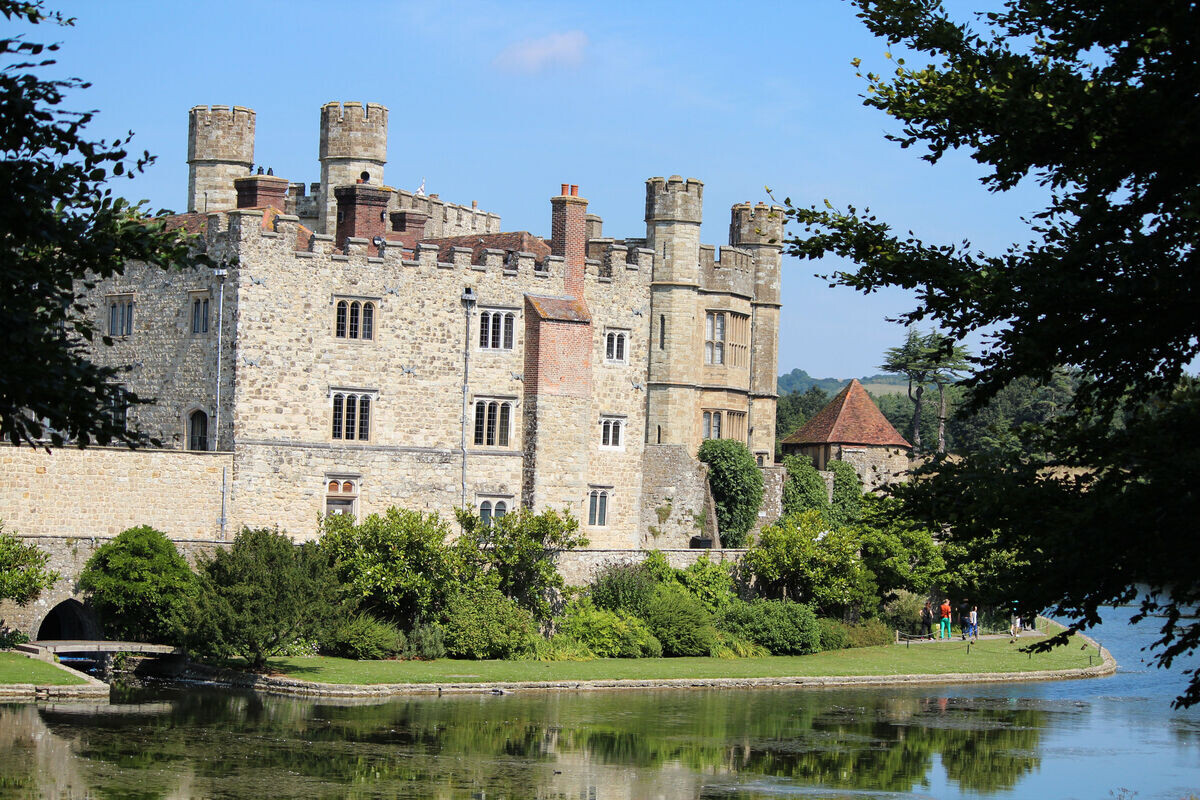
Afterwards, you travel to Leeds Castle (optional), a moated castle with the wow factor, set amid the gently rolling hills of Kent in the middle of a shimmering lake – and often described as the „most beautiful castle in the world". Is that true? Decide for yourself! Originally built in the 11th century as a Norman fortress, Leeds Castle has served over the centuries as a royal residence, a home for royal widows and a summer palace. Six English queens called it home, earning it the nickname Ladies Castle. Today, the castle offers fascinating glimpses of medieval splendour, Tudor elegance and Victorian comfort – with original furniture, paintings and tapestries. Here, history was made, intrigues were hatched, quarrels were fought and romances blossomed. How about a lively chat over coffee? (optional) see our tip.
In medieval Oxford, two worlds collided: the university with its papal privileges and the town with its secular law. Students enjoyed special rights – and took full advantage of them. Tavern brawls regularly escalated and an argument over bad beer sparked a bloody riot. The king punished the town harshly: Every year, the town leaders had to walk bareheaded through the streets, endure being pelted with eggs and pay a symbolic penny for each student killed – a practice that continued into century 19, as the decree was not officially repealed until 1955.
The picture-postcard landscape of the Cotswolds enchants visitors with rolling hills, honey-coloured stone villages, magnificent gardens and a remarkable history: In the Middle Ages, this region was one of the kingdom’s economic powerhouses, and its wealth rested on sheep, whose fine wool was sought after throughout Europe. The famous „Cotswold Lion sheep“, with its long fleece, produced the most coveted wool and attracted buyers from as far away as Italy. The region’s markets became a hub for European trading networks. In Bibury, Arlington Row is a row of medieval weavers’ cottages dating from the 14 century, now one of England’s most photographed sights. This wealth gave rise to monumental „Wool Churches", funded by merchants who immortalised their gratitude. The Cotswolds were so prosperous that people used to say: „Half the wealth of England rides on the back of a sheep."
England’s cider also has roots reaching deep into the Middle Ages. To round off your visit, you head to a cider mill (optional). After the Norman Conquest 1066, the new rulers brought not only castles and laws, but also their taste for fermented apple juice. Monasteries and manor houses planted apple trees and pressed cider – a drink that kept well, was nourishing and was safer than water. A tasting offers a glimpse of how monastic science became a worldly pleasure – and shows that some medieval inventions really are timeless.
Depending on your hotel’s location, the morning takes you to Gloucester Cathedral – and anyone stepping through its west doorway will immediately understand why. Begun in the 11 century as a Norman church, it developed over the centuries into one of England’s most ambitious works of Gothic architecture. King Edward II is buried here – deposed, murdered, then revered as a martyr. His tomb drew pilgrims from all over England and filled the coffers. Admire the beautiful cloister vaulting and the vast east window – around 25 metres high and 12 metres wide – the largest medieval stained-glass window in the country. Look closely and you will spot familiar filming locations from Harry Potter. Admission is free – a voluntary donation of approx. 5 £ per person is requested to help preserve this extraordinary building (as of 06/2026).
You visit the magnificent Warwick Castle – one of England’s best-preserved medieval castles. The town itself has numerous historic buildings and offers a wonderful insight into medieval life. In 1068, William the Conqueror planted a wooden castle on the rock above the Avon, right in the heart of the conquered Saxon lands. Wood gave way to stone, and a makeshift fortress became a centre of power. Here the Earls of Warwick ruled, sent armies into the Hundred Years’ War and played a bloody part in the Wars of the Roses. In the Great Hall hang suits of armour that look as though they might spring back to life at any moment. In the castle courtyard stands an enormous trebuchet – one of the few working reconstructions of a medieval siege engine anywhere in the world. Warwick Castle was no fairy-tale castle. It was an instrument of power – built to impress, defend and control.
Chester is a city with layers – quite literally. The Romans once built their largest legionary fortress in the north here, and the Normans added another layer. The medieval city walls still follow the Roman foundations – two kilometres, almost entirely intact, and walkable from the first stone to the last. From the top, you look out over a city that has been inhabited for almost two thousand years. Unique in England: the Rows – two-tiered covered galleries dating from the 13th/14th centuries. Merchants, trades and guilds went about their daily business here. Chester was a border town, trading centre and military stronghold all at once. You can still feel it in every lane.
Anyone seeing the ruins of Fountains Abbey for the first time (optional) cannot help but marvel. The mighty tower, the Gothic arches, the remains of the monks’ quarters, brewery and granary – all built from the same grey limestone. In 1132, thirteen rebellious monks from York came here to lead a stricter life under the Rule of St Benedict. What began as a protest became England’s most powerful Cistercian abbey. In the 13th/14th century, Fountains Abbey owned thousands of hectares of land, sheep, mines and fishponds – an economic empire cloaked in humility. In 1539, Henry VIII put an end to it all. What remains are walls that say nothing – yet speak volumes. Take a little more time to stroll through Studley Royal Water Garden. Laid out in the 18th century, it was deliberately designed around the abbey – monastic ruins and garden artistry forming a carefully considered whole and together a UNESCO World Heritage Site.
Your next stop may seem surprising at first glance – but look again and it fits perfectly. The Cistercian monks brewed their own beer – not (just) for pleasure, but out of sheer necessity. Water was unsafe, beer was not. What the monks began out of conviction became a way of life. Black Sheep Brewery has carried on this tradition since 1992 – with character, stubbornness and a name that says it all. A brewery tour offers a glimpse into the brewhouse, fermentation cellar and storage tanks; at the tasting afterwards, the results speak for themselves.
Today you will not set off until around midday, beginning with a visit to Raby Castle (optional) – not a ruin, but a stronghold with nine towers, battlements and a mighty curtain wall, built in the 14th century by the powerful Neville family. Raby was the birthplace and stage of a dynasty that helped rule England. And if you have been paying attention, you will already recognise the name: In Warwick, you traced the footsteps of Richard Neville, the most powerful nobleman of his time. Yet this splendour came at a price – the Rising of the North, a Catholic rebellion in support of Mary, Queen of Scots, failed. Raby was confiscated. What remains is one of northern England’s most impressive medieval castles – with state rooms, historic kitchens and art collections that have stood the test of time. And if you fancy it: The café offers lunch or a tea break with views of the castle (optional).
In the afternoon, you will head to Kynren. Enjoy dinner at your own leisure on site (please note that the venue is cashless, card payments only). Subject to availability and by prior arrangement, we will be happy to book a group dinner for you, e.g. a medieval feast (optional).
What has so far been recorded in stone and on paper comes to life in the evening. Kynren is one of Europe’s largest open-air spectacles – with over 1.000 performers, real horses, fire, pyrotechnics and a stage the size of several football pitches. The show tells the story of England – from the Romans to the 20th century – giving the Middle Ages the attention they deserve: battles, kings, faith, betrayal. Kynren is no mere tourist spectacle. It is a complete work of art – loud, visually stunning, emotional and utterly unforgettable. An absolute highlight of this trip.
Today you visit one of the most impressive places in northern England. What began in 635 as a simple monastic community became the starting point for the Christianisation of northern England – and thus one of the most important religious centres in early medieval Europe. It was here that the famous Lindisfarne Gospels were created – an illuminated Gospel book of breathtaking beauty, ranked among the greatest works of art of the Middle Ages. In 793 Vikings destroyed the monastery – the shock reverberated across Europe. What the Normans later built from the ruins still stands today: reddish-brown sandstone arches standing defiantly against the North Sea wind. Lindisfarne is where England found its faith. From Seahouses, you first take a boat trip around the Farne Islands – with a little luck, dolphins and porpoises will accompany you along a coast that has fascinated seafarers, monks and Vikings since the early Middle Ages. You have two hours ashore: time for Lindisfarne Priory, and Lindisfarne Castle high on its basalt outcrop.
In the afternoon, enjoy free time in Durham, picturesquely situated on the banks of the River Wear. The highlight is Durham Cathedral (optional), a UNESCO World Heritage Site and a masterpiece of Norman architecture. With its majestic rounded arches and venerable vaulting, it remains one of the most impressive medieval buildings in Europe. The Normans did not just build a church here – they set in stone who was in charge. Inside lies the tomb of Saint Cuthbert, Bishop of Lindisfarne, whose remains finally found rest here after decades on the move to escape the Vikings.
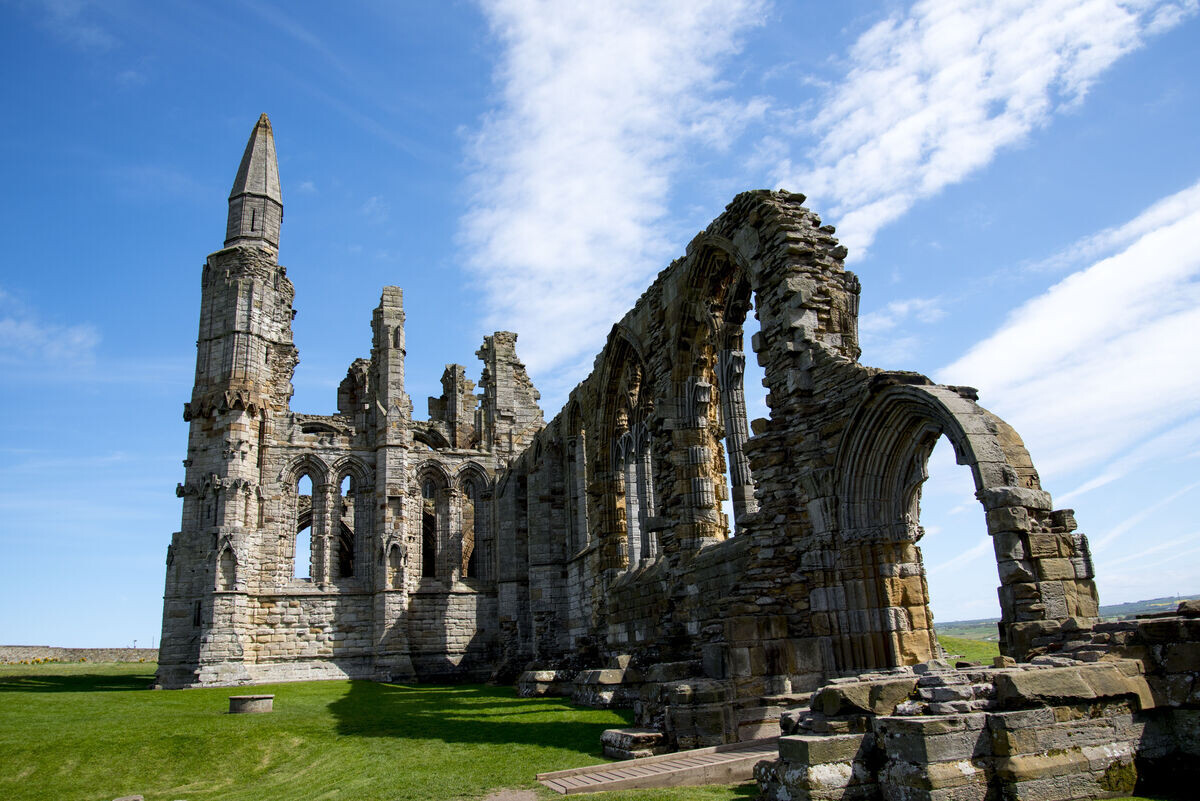
On the final day of your journey through medieval England, we recommend an excursion to the North York Moors National Park. Whitby looks as though someone simply stacked a medieval harbour town and a Gothic ruin on top of each other – and somehow it works. High on the cliff stand the remains of Whitby Abbey (optional), founded as early as 657, destroyed by Danish Vikings and rebuilt by the Normans. 199 steps lead up to it. Next door, the gravestones of St. Mary's Church lean crookedly in the sea breeze – this is the very spot where Bram Stoker found his setting in 1890. In Whitby, the Irish writer read about a Russian schooner that had drifted into the harbour with no one at the helm and its captain dead. It became the ghost ship that brought Count Dracula to England. Around the harbour, medieval lanes weave between fishermen's cottages that have stood here for centuries. A trading port, a monastic town and a setting for Gothic horror all at once – leaving one question: did its most famous visitor really leave?
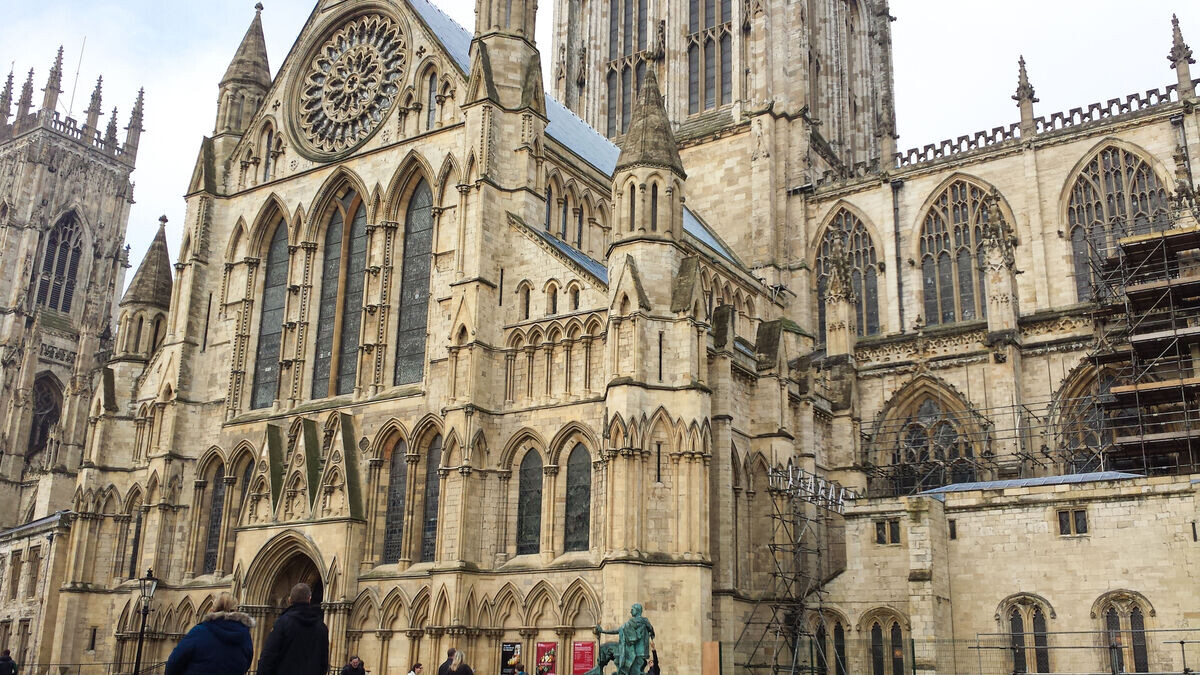
Next, we head to York, a medieval highlight we have saved for last. York Minster rises above the city centre – the largest medieval Gothic cathedral in Northern Europe (optional visit). Its vast Great East Window, as large as a tennis court, is one of the world's most significant stained-glass windows. The narrow Shambles, a medieval butchers' street dating from century 13, is one of England's best-preserved medieval streetscapes – the overhanging timber-framed houses almost touch. Then it is time to say goodbye. In the evening, you board your ferry in Hull, which takes you back to the continent overnight, with countless stories from England's history to take home.
In the early morning, the ferry glides into the port of Rotterdam. Eight days in England lie behind you. The white cliffs of Dover that welcomed you feel a lifetime away. Canterbury, the villages of the Cotswolds, cider and beer brewed to age-old monks' recipes..., you have seen and experienced so much to reflect on at leisure during your journey home. Share your memories with your fellow passengers. "Do you remember, at Raby Castle? Or was it Warwick? And then there was Kynren. That one unexpected night that everyone will carry home with them. Because anyone who has journeyed through medieval England, who has stood on the same cobblestones as Normans, pilgrims and kings, sees the world a little differently afterwards. Have a safe journey home. And goodbye – England is already looking forward to your next visit.
Cloth, power and a hall that welcomed kings: Coventry
As an alternative to visiting the cathedral in Gloucester, we recommend a stop in Coventry. In the Middle Ages, looms clattered here day and night. Once one of England's most important cities and the leading centre of the English cloth trade, Coventry was wealthy, confident and politically influential enough to host kings. Visit St. Mary's Guildhall – a remarkably well-preserved guildhall. Built as early as 1340, it was far more than a meeting place. Here, merchants and guilds governed their city, administered justice and welcomed kings. The Great Hall still houses the Coventry Tapestry – the oldest in Britain still hanging in its original location, while one of the few surviving medieval kitchens has been uncovered once more. Coventry has lost much – the Guildhall has survived and still tells the story of what this city once was. We would be happy to arrange a relaxing tea break or Afternoon Tea for you before you continue towards Chester.
Our tip:
A must for your itinerary! Enjoy tea/coffee and a chat in the Tower House at Leeds Castle, with a talk on "The Women of Leeds Castle" (in German subject to availability). "The Ladies' Castle" was home to six medieval queens for over 300 years. These women were far more than figureheads. The talk offers a fresh perspective on female rule in the Middle Ages – much more exciting than "just" castles and knights! It gives this medieval-themed tour a special, personal touch – a perfect blend of learning, atmosphere and enjoyment.
Included services
- Ferry crossings:
- France – Dover for coach and passengers
- Hull – Rotterdam for coach and passengers
- Accommodation in 2-berth cabins
- English breakfast on board
- 1 x overnight stay with breakfast
- 6 x overnight stay with half board
- Half board with a 3-course evening meal or buffet
- Good SRG mid-range hotels
- 1 x 2-hour walking tour of Canterbury
- 1 x 2 hr walking tour of Oxford
- 1 x admission to Warwick Castle
- 1 x 2-hour guided walking tour of Chester
- 1 x admission and guided tour of Black Sheep Brewery incl. beer tasting (1 pint)
- 1 x 1,5 hr admission (standard ticket) to the open-air spectacular Kynren – the epic story of England
- 1 x 4,5 hr boat trip to Holy Island
- 1 x admission to Lindisfarne Priory
- 1 x 2-hour guided walking tour of York