Tour description
Join us on a delicious journey through Sicily! You will visit the rumbling volcano Mount Etna, the vibrant capital Palermo and historic Syracuse. Along the way, your taste buds will be treated to Sicilian delicacies almost every day, – from traditional almond pastries in Erice to tastings of salt products in the lesser-known west of the island, at the salt pans between Marsala and Trapani. Delicate, melt-in-the-mouth chocolate awaits you in the late Baroque town of Modica in the Val di Noto. You will also enjoy traditional Sicilian arancini after visiting the culturally diverse city of Syracuse with its historic old town of Ortygia. Taste the warmth of the southern Italian sun in orange marmalade at a farm near Cefalù. A tasting of delicious wine at the foot of Mount Etna provides the crowning finale to your culinary journey.
Itinerary
Look forward to delicious flavours and exciting days in Sicily. You first travel to Genoa, where your ferry to Palermo departs in the evening.
Sicily’s capital and most important port lies on a broad bay, bounded by Monte Pellegrino to the north and Cape Zafferano to the south. It stands on the edge of a fertile plain enclosed by a semicircle of hills; known as Conca d`Oro and covered with citrus groves. On arrival, transfer to the hotel for dinner.
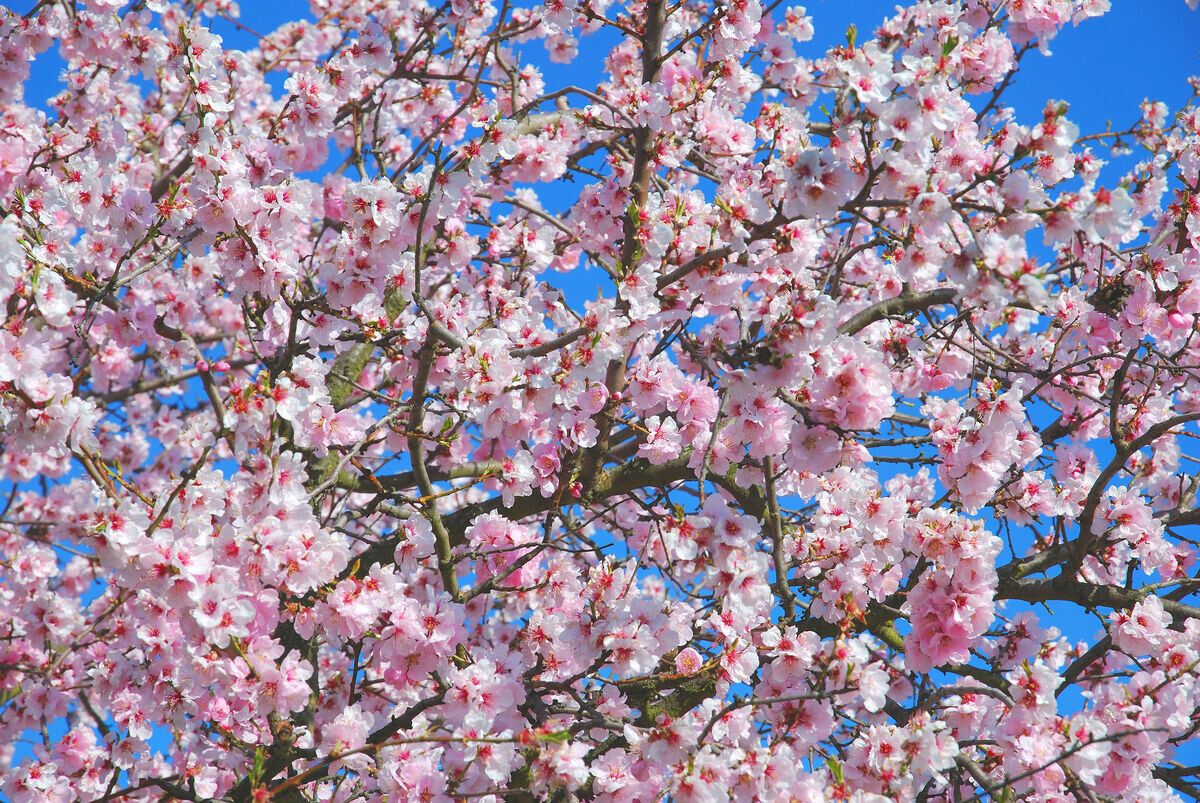
Today you will discover western Sicily, a wonderfully varied region with vineyards, salt pans and mysterious ancient remains. You will travel to Erice, also known as the „museum of stone“ for its beautifully preserved historic character. This hilltop town stands on a 750m-high massif and has dominated the west coast since time immemorial. Once well fortified, as its castle and town walls testify, the small town is famous for its enchanting atmosphere, breathtaking views of Trapani, the salt pans and the Aegadian Islands, and its delicious almond pastries, which you will of course sample at a renowned pastry shop. You will then head down to the salt pans between Marsala and Trapani. As well as maintaining the centuries-old tradition of salt production, this nature reserve provides a resting place for migratory birds on their way to Africa. You will enjoy a guided tour of one of the salt mills and sample the salts produced here. Return to the Palermo area in the evening.
After breakfast, you travel to the centre of the island, to Enna, the navel of Sicily. This charming little town has a rich and varied history, from the Phoenicians and Romans to the Byzantines, Arabs and Normans. A notable sight from this period is the Castello di Lombardia (exterior), whose highest point, the Torre Pisana, offers wonderful views of Mount Etna, Sicily’s only natural lake, Lago di Pergusa, and the surrounding countryside. The 2600-year-old castle was repeatedly adapted to the needs of successive rulers and still retains 6 of its original 20 towers. Leaving the “Belvedere of Sicily”, you continue south into the green central highlands to Piazza Armerina. The town, set in the Monti Erei near the nature reserve, is dominated by the Cathedral of Maria Santissima Assunta. Here you see the Villa Casale (exterior). This extensive villa complex, dating from the 3 or 4 century AD, probably belonged to a person of high standing. Particularly worth seeing are the floor mosaics, distinguished by their variety of motifs and rich range of colours. They have been beautifully restored and recognised by UNESCO as a World Heritage Site. The best-known mosaics depict little Cupid figures.
Today you visit the towns of Ragusa and Modica, which form part of the UNESCO World Heritage Site of the Late Baroque Towns of the Val di Noto. The old town of the charming provincial capital Ragusa consists of two parts, surrounded by a deep gorge. Stroll through the narrow lanes and enjoy the breathtaking panoramic views. The Chiesa di S. Maria delle Scale and the Chiesa del Purgatorio, dating from the 18 century, are among Ragusa's most important sights. The romantic old town of Ragusa Ibla was spared by the earthquake and forms the historic centre, with narrow lanes, magnificent churches and late Baroque palaces. Continue to Modica, strategically situated on a hill and surrounded by gorges. The houses seem to nestle into one another, clinging to the rock faces. The clock of the former castle dominates the town. Its elevated position makes it visible from all sides. Other sights worth seeing in the town of a hundred churches include the Duomo di San Pietro, with twelve majestic statues of the apostles gracing its broad flight of steps, and the five-aisled Duomo San Giorgio. The main shopping street, Corso Umberto, is lined with Baroque palazzi featuring elaborate decorations and ornate balconies, while the narrow lanes invite you to take a leisurely stroll. The town is known for its traditional chocolate-making using Aztec recipes. Enjoy the intense cocoa flavour during a tasting at a chocolate maker's.
Syracuse enjoys a beautiful setting on a bay of the Mediterranean. A particularly mild climate awaits you here. Traces of the various peoples who once lived here can still be seen in the archaeological area. This is especially evident in the historic old town on the island of Ortygia. Here, Baroque, Roman and Greek elements come together in an impressive architectural ensemble. Another unique feature is the legendary Fountain of Arethusa, which gave rise to papyrus cultivation and Egyptian-style painting, a speciality of Syracuse since the 18 century. After these historical discoveries, you can look forward to more culinary delights. Arancini, a Sicilian street food classic, are perfect for enjoying on the go. These little deep-fried, orange-coloured rice balls come with a wide variety of savoury fillings. Let their unique flavour surprise you. In the evening, you arrive at your hotel in the Taormina area.
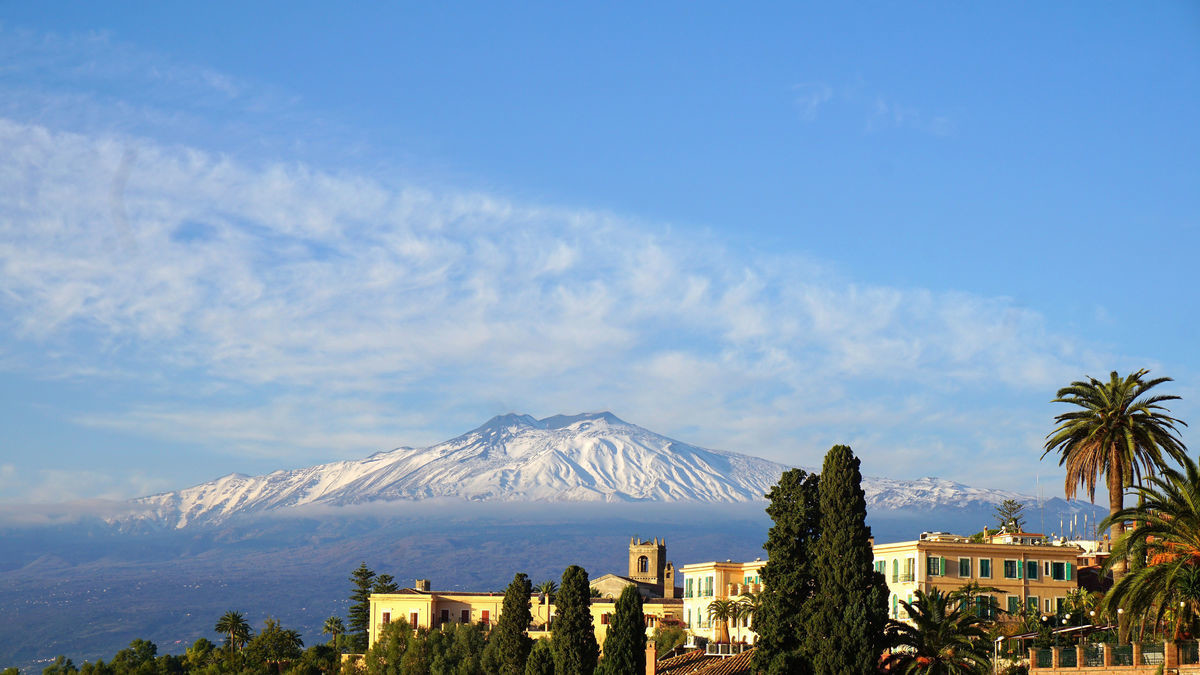
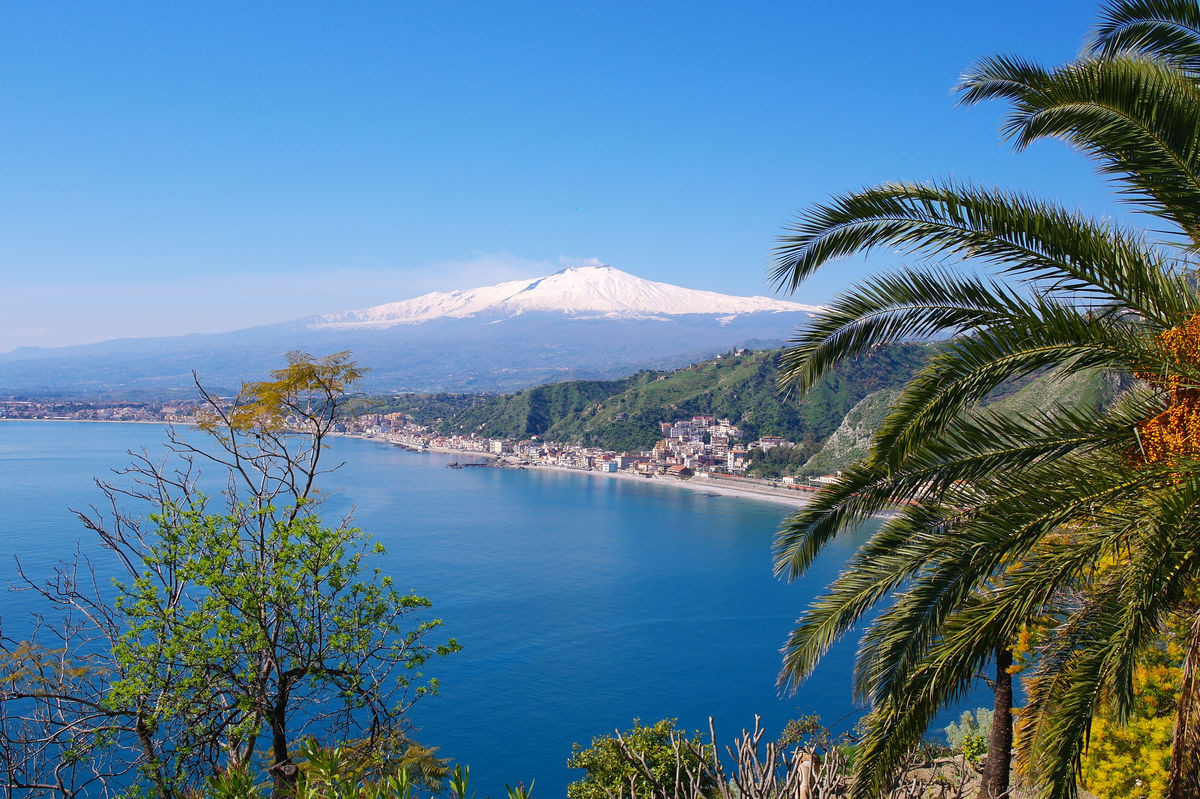
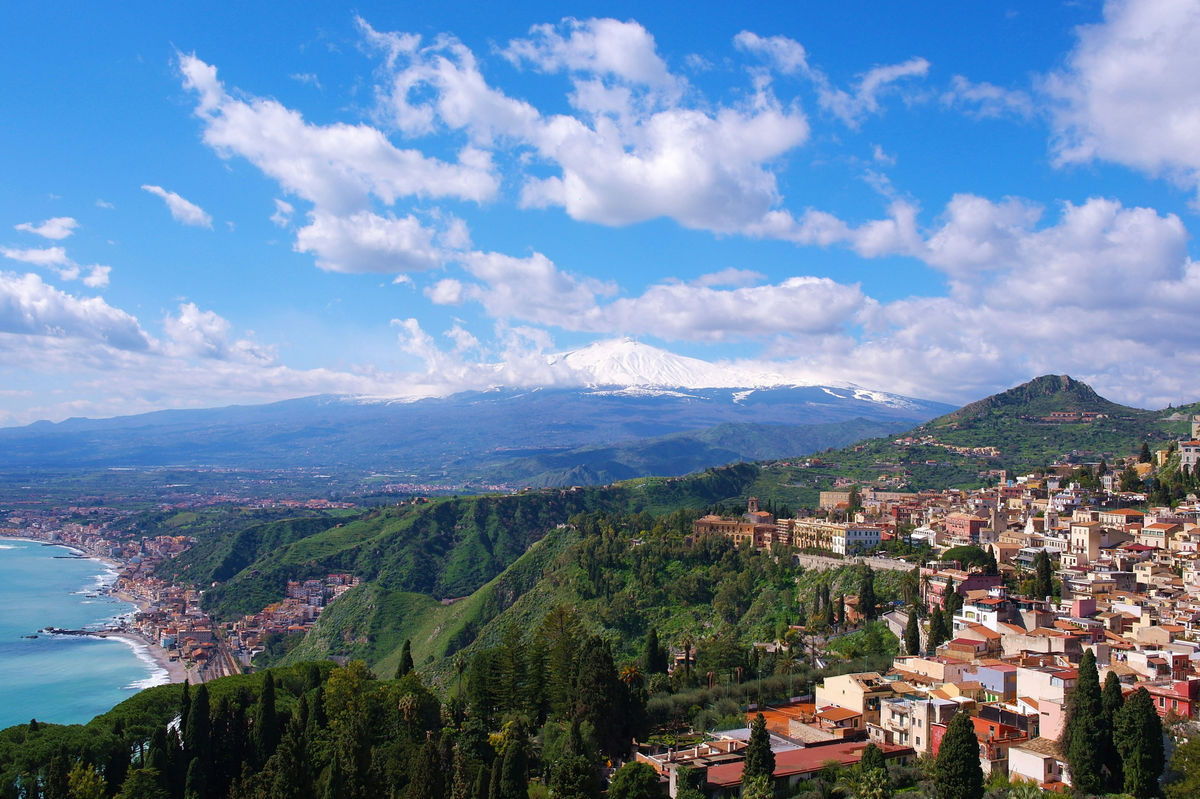
Today, a spectacular highlight awaits you: Mount Etna, Europe's highest active volcano. This smoking giant can be seen from afar. It covers an area of almost 1300 Km2 and rises to a height of 3343m. Travelling through vineyards, rugged mountain scenery, forests and cooled lava flows, you approach the visitor station at an altitude of 1900m. Here you will find the so-called „Silvestri Craters“. For an additional charge, you can take a cable car and off-road vehicle up to an altitude of 2900m. At the foot of the main crater, you can enjoy a short walk accompanied by mountain guides. At lunchtime, a wine tasting awaits you, including a light meal of traditional homemade Sicilian specialities, at a charming country estate on Etna's eastern slopes. Enjoy beautiful views over the Cyclops Riviera. You then reach the enchanting little town of Taormina, spectacularly situated on a terrace of Monte Tauro and once praised by Goethe as the „Pearl of Sicily“. On a walking tour of the town, enjoy an unforgettable panorama of the picturesque coastline and volcanic scenery from the Greek-Roman theatre, then stroll along the charming Corso Umberto. On the return journey, you can reflect on the day's many impressions.
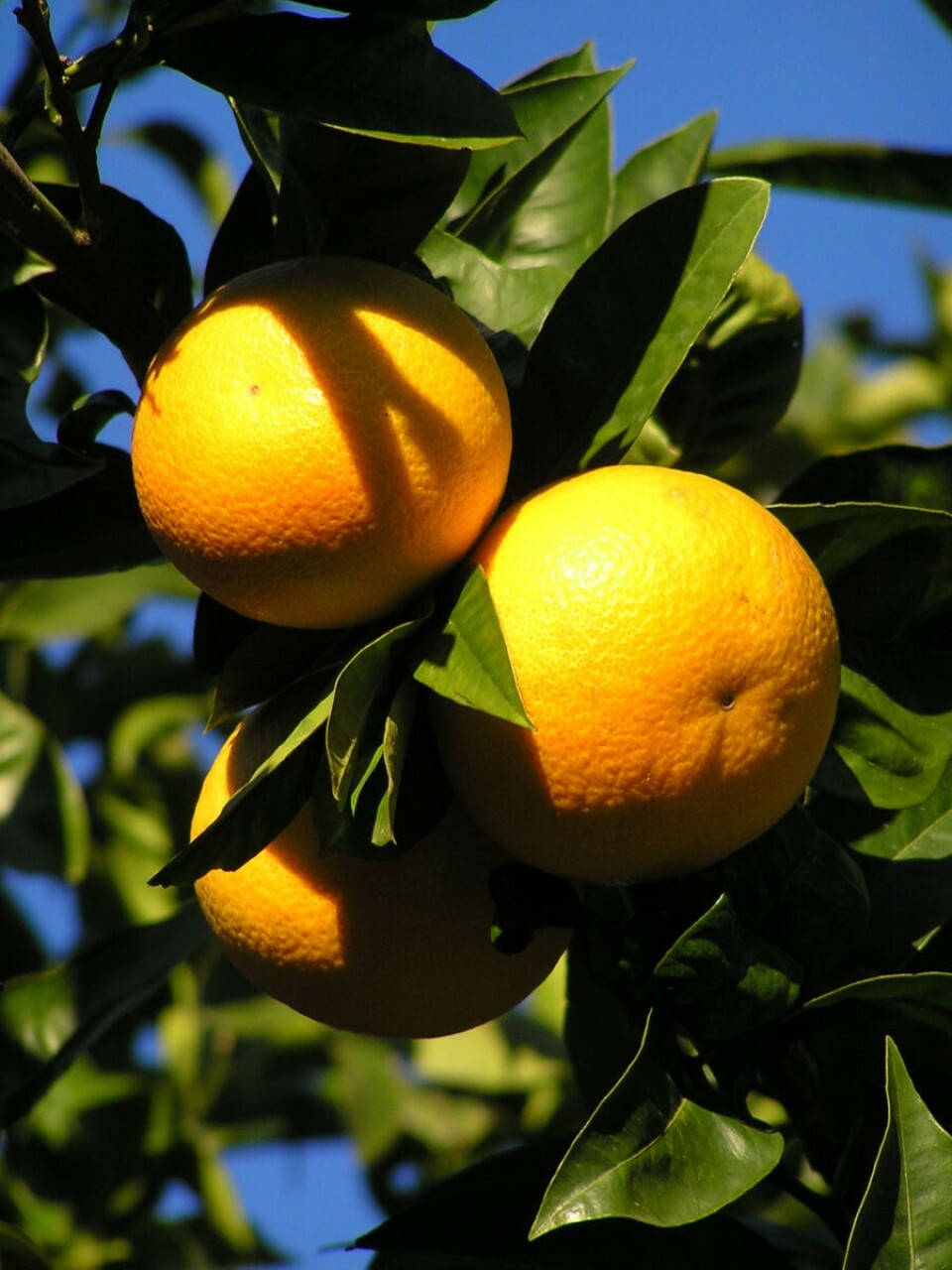
Travel along the coast to Cefalù, stopping at an orange plantation for a tasting along the way. This small fishing town boasts countless beautiful buildings. The most interesting part for visitors is undoubtedly the old town, Cefalù Vecchio. Its characteristic narrow lanes, shaped by everyday life and history, make strolling through the old town a particularly lovely experience. Ancient buildings appear at every turn, adding to the beauty of this coastal town. Then continue to Palermo – the capital of Sicily. The city is rich in monuments and buildings from every era and civilisation that has ruled it over the centuries. Sights include the tomb of Frederick II, the Norman Palace with the Palatine Chapel, and the churches of San Giovanni degli Eremiti and La Martorana. For those with a taste for the bizarre, the Capuchin Catacombs in the monastery of the same name are well worth a visit. Here, the mummified bodies of thousands of believers and monks are lined up in a striking display. Board the ferry to Genoa in the evening.
After a relaxing day at sea, arrive in Genoa at around 19.30 and begin your journey home.
Included services
- Ferry crossings:
- Genoa – Palermo
- Palermo – Genoa
- 2 x breakfast on board in the self-service restaurant
- Accommodation in 2-berth cabins
- 6 x overnight stay with half board
- Half board with a 3-course evening meal or buffet
- Upper mid-range SRG hotels
- 1 x Tour guide throughout from day 3.-8. incl.:
- Full-day excursion to Erice and along the Salt Road to Marsala
- Almond pastry tasting in Erice
- Guided tour of a salt mill and tasting at the Marsala salt pans
- Full-day excursion to Enna and Piazza Armerina incl.:
- Visit to Lombardia Castle (exterior only)
- Visit to the Roman villa in Piazza Armerina (exterior only)
- Light lunch at a country estate in the Piazza Armerina area
- Tour of the old towns of Ragusa and Modica
- Chocolate tasting in Modica
- Full-day excursion to Syracuse and the surrounding area
- Arancina tasting in Syracuse
- Admission to the Syracuse Archaeological Park
- Full-day excursion to Mount Etna and Taormina
- Visit to a winery on Mount Etna and wine tasting with a light lunch
- Full-day excursion to Cefalù and Palermo
- Visit to an orange plantation with marmalade tasting
- Quietvox audio guide system for the entire trip
When to travel
When is the best time to visit Italy?
Italy is an attractive destination all year round. While spring and autumn are particularly popular for cultural trips and touring holidays, summer beckons with lakes, coastlines and mountain scenery. In winter, the Alps in particular offer a wide range of travel options.
| Travel experience | JJan | FFeb | MMar | AApr | MMay | JJun | JJul | AAug | SSep | OOct | NNov | DDec |
|---|---|---|---|---|---|---|---|---|---|---|---|---|
| Cultural trips and city breaks | – | – | suitable | suitable | suitable | suitable | – | – | suitable | suitable | – | – |
| Tuscany and touring holidays | – | – | – | suitable | suitable | suitable | – | – | suitable | suitable | – | – |
| Northern Italian lakes | – | – | – | suitable | suitable | suitable | suitable | suitable | suitable | suitable | – | – |
| The Mediterranean and coastlines | – | – | – | – | suitable | suitable | suitable | suitable | suitable | – | – | – |
| The Dolomites in summer | – | – | – | – | – | suitable | suitable | suitable | suitable | – | – | – |
| Food and wine | – | – | – | – | – | – | – | – | suitable | suitable | suitable | – |
| Winter sports in the Alps | suitable | suitable | suitable | – | – | – | – | – | – | – | – | suitable |
General guidance – the best time to travel depends on the region, weather and itinerary. Find out more about Italy