Tour description
Nowhere is winter more impressive than in the far north. Far from the bustle of everyday life, a journey awaits through the tranquil expanses of Lapland, forests deep in snow and across sparkling fjords. The route leads from Sweden across the Arctic Circle to the spectacular Lofoten Islands, where rugged mountains rise directly from the sea and the Gulf Stream creates fascinating contrasts even in winter.
Unlike traditional winter holidays, this tour combines Scandinavia’s most impressive landscapes with authentic nature experiences, Nordic culture and the finest winter panoramas of the north. A journey to Narvik on one of Europe’s most beautiful railway lines, exciting winter activities and the chance to see the Northern Lights complete the experience. And with two nights on the Lofoten Islands, you can fully immerse yourself in this magnificent island world during a quieter season, far from the tourist crowds.
Itinerary
Kiel, the capital of Schleswig-Holstein, is the first stop on your journey. It enjoys an attractive setting at the southern end of Kiel Fjord, a Baltic Sea inlet extending deep inland. The first sailing regatta took place here as early as 1882, and even today "Kiel Week" ranks among the world's most important sailing events. In the early evening, you too will set sail – aboard a Stena Line ferry bound for Sweden.
Gothenburg is a cosmopolitan city with a rich cultural offering and, with around 500.000 inhabitants, Sweden's second-largest city. It offers visitors numerous sights, e.g. the large Gustav Adolfs Torg square with its town hall, Kronhuset – Gothenburg's oldest building or the Röhsska Museum of Design and Craft. Gothenburg's grand boulevard, Kungsportsaveny, is lined with beautiful buildings and numerous shops, restaurants and cafés. You can relax in the lovely parks, e.g. Trädgardsföreningen (Garden Society) with its rose garden, palm house and butterfly house or in the country's largest botanical garden. After the ferry docks, you head east. There is a cheese dairy in Falköping. On a guided tour (optional), learn more about cheesemaking and sample 5 different cheeses produced there. You then continue via Skövde and Örebro. Your destination today is Västeräs.
There are plenty of towns and cities worth seeing along today's route: The university city of Uppsala has much to offer - from fascinating museums to its cathedral, the largest in Scandinavia. In Gävle, you will find pretty wooden houses from the 18th and 19th centuries, as well as a railway museum with one of the world's largest collections of locomotives and carriages. Hudiksvall has one of Sweden's best-preserved town centres with wooden houses, while Sundsvall boasts an attractive market square lined with grand buildings.
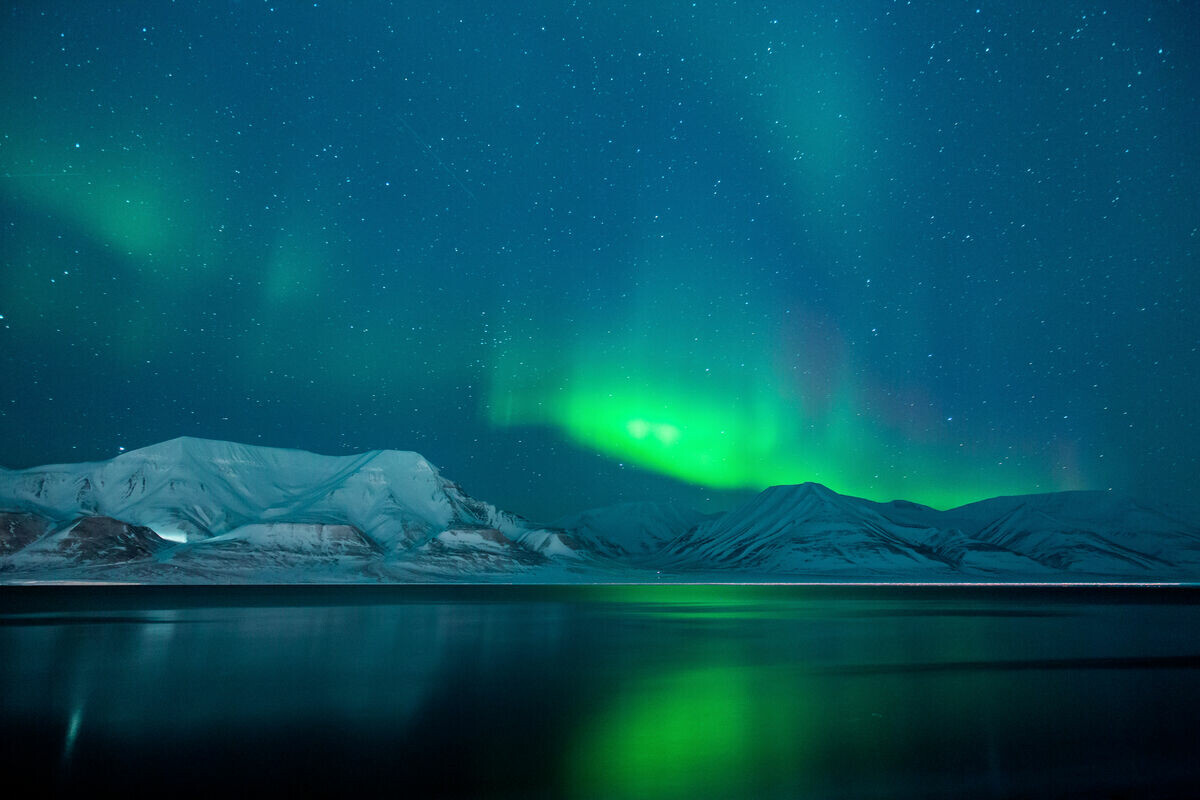
In Härnösand, you can visit one of Sweden's largest open-air museums. Crossing the Högakustenbron, one of Scandinavia's longest suspension bridges, you reach the "High Coast" (Höga Kusten), a UNESCO World Heritage Site. The enormous land uplift that occurred here after the ice melted at the end of the last Ice Age is unique in the world. The next major town and your destination for today is Umeå. It is known for its broad birch-lined avenues and diverse cultural attractions. Sights worth seeing include the open-air museum and the Västerbotten Museum, which features exhibitions on the region's history and culture. Today, a visit to a reindeer farm is on the itinerary. During the 1,5-hour visit, you will learn more about the reindeer and see them up close. A very special experience awaits you this evening. An experienced guide will tell you more about the celestial phenomenon of the Northern Lights, and you will enjoy a traditional Arctic dinner.
Today you continue along the coast of the Gulf of Bothnia to Luleå. Before reaching Luleå, a little further north of Umeå, you first pass Skellefteå, where many well-preserved wooden houses can still be found, and the charming town of Piteå with its long sandy beach. In winter, an icebreaker also departs from Piteå (optional). You head out across the frozen Gulf of Bothnia and have the opportunity to try "Floating" amid the sea ice. Luleå also lies on the coast of the Gulf of Bothnia. Particularly worth seeing is the church village of Gammelstad, approx. 10 km away, with around 400 little wooden houses where people stayed overnight when they travelled from distant places to attend church services. Gammelstad Luleå is Sweden's largest church village and a UNESCO World Heritage Site.
You now continue through Swedish Lapland, with its almost untouched natural landscapes, towards Gällivare. Along the way, you cross the Arctic Circle, which separates the polar region from the temperate zone. Via Gällivare, an important transport hub, you reach Kiruna, Sweden's northernmost town. Iron ore mining still plays a major role here today. As extensive mining has made the ground increasingly unstable, Kiruna has been gradually relocated and redeveloped for several years now. This major project will take around 2 - 3 decades. The relocation of the church not only made headlines but also featured as a question on numerous quiz shows. The ICEhotel lies not far from Kiruna. Here, you can both spend the night surrounded by ice and admire ice sculptures 365 days a year. How about a snowmobile tour through the snow-covered winter landscape around Kiruna (optional)? Afterwards, you continue to Abisko. You can take the chairlift up to the Aurora Skystation (optional) and enjoy a magnificent view of Lapporten – the gateway to Lapland – a famous rock formation and landmark of Swedish Lapland. Afterwards, you continue to your accommodation in Björkliden.
After breakfast today, you continue to your first stop in Narvik. But today you change your mode of transport. You board the train and travel along the scenic Ofoten Line. Crossing the border into Norway, you head to the town of Narvik on the west coast. Narvik rose to prominence primarily as a port for shipping Swedish iron ore from Gällivare and Kiruna. You can learn more about the town's history at the Ofoten Museum and the War Memorial Museum. Fagernesfjell (656m), reached by cable car (optional), offers sweeping views over the town, the sea and the Ofoten mountain range. From Narvik, you continue by coach to Svolvaer in the Lofoten Islands.
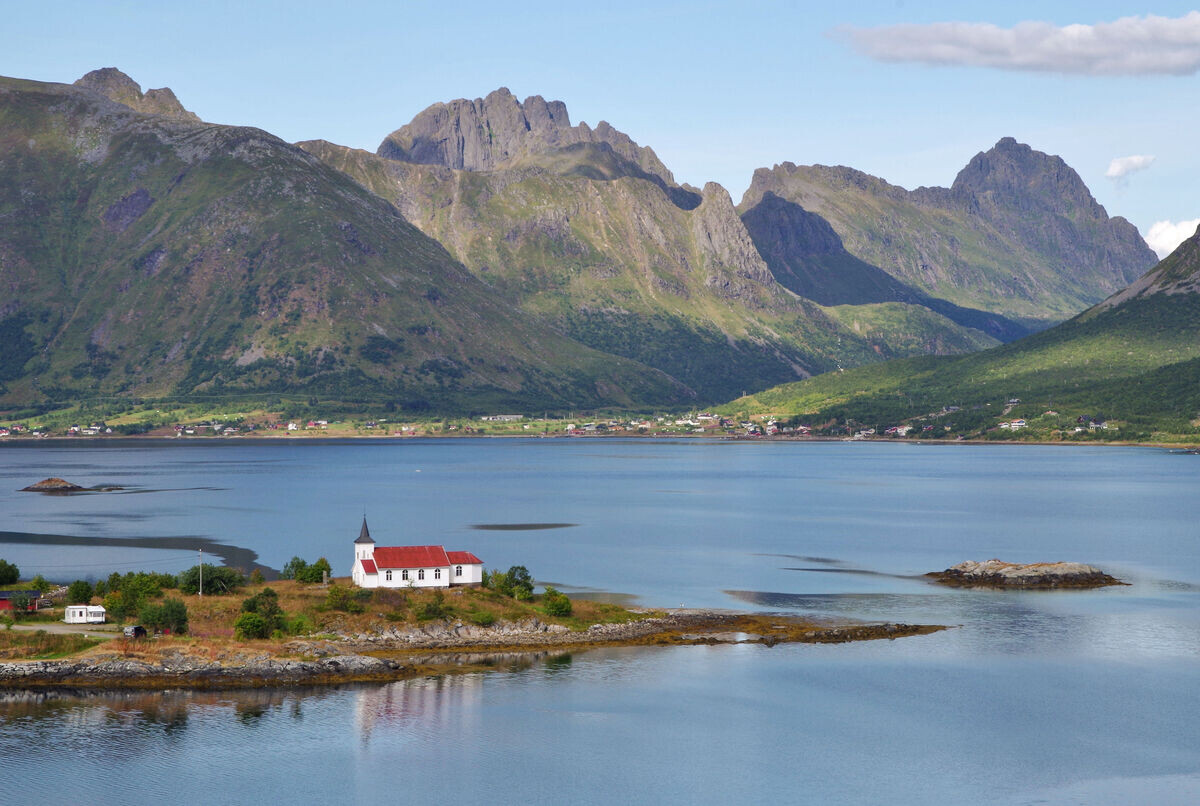
After breakfast, it is time for the first activity on the programme. On a 3-hour snowshoe tour, you can admire the snow-covered mountains and soak up the white winter landscape. Afterwards, you have the opportunity to get to know the Lofoten Islands better on a guided sightseeing tour (optional). The towering, sometimes bizarre rock formations, white sandy beaches and picturesque fishing villages are sure to delight you. Svolvaer, the main town in the Lofoten Islands, sits against the backdrop of the spectacularly shaped Svolvaergeita mountain, which rises steeply to 569m. Not far away, in Kabelvag, you can visit attractions including the Lofoten Museum, the aquarium and the largest wooden church in Northern Norway – Vagan Church (optional). In 2026, "Skrei“ opened here (optional) – an interactive visitor and learning centre dedicated to the Lofoten fishing industry. Here, everything revolves around skrei (Arctic cod) and its great importance to the economy and culture of the region and Norway as a whole.
The ferry from Lodingen to Bognes takes you back to the mainland. A route with numerous tunnels and bridges brings you to Fauske – known for its marble quarries. Further south lies the village of Rognan. Here you will find the Saltdal Open-Air Museum and the Blood Road Museum, which commemorates the fate of tens of thousands of Eastern European prisoners of war who were forced to build railways and roads here under inhumane conditions from 1942 - 1945. You then cross the Arctic Circle on the remote Saltfjell plateau. Travelling via the mining village of Storforshei, you reach Mo I Rana, a port and industrial town on the Ranafjord. At the Mo I Rana Museum (with an open-air section outside the town), you can learn about the region's history and natural environment. Stroll along the fjord promenade past the old wooden houses of Moholmen and the sculpture "The Man in the Sea“, standing in the water.
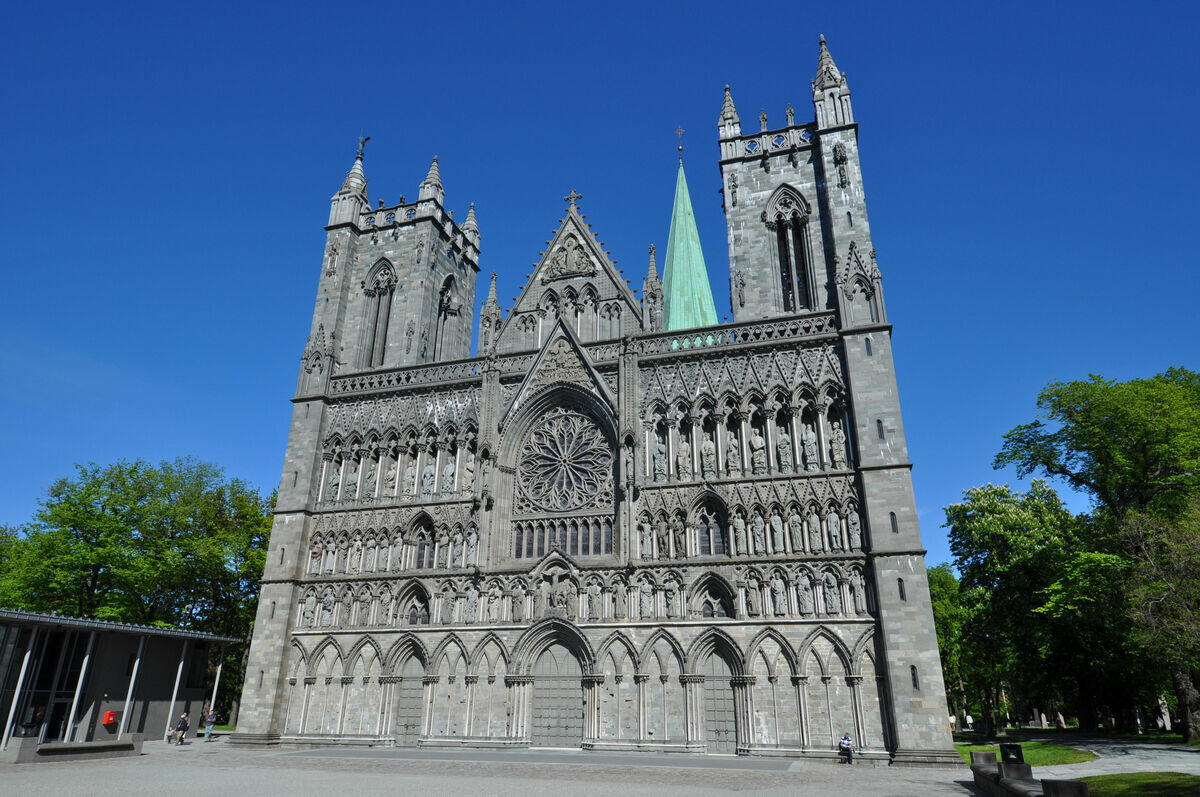
The town of Mosjøen, with its pretty, well-preserved wooden houses, lies on your route south. You travel through dense forests, passing Europe's longest salmon ladder. Regions steeped in history follow: Around Steinkjer, you can find rock carvings dating back thousands of years, including the famous life-size reindeer "Bolareinen". Further south, near Verdal, the famous Battle of Stiklestad took place in 1030. Stiklestad National Culture Centre offers exhibitions about the battle, a museum with historic buildings and more. Alternatively, we would be happy to arrange a train journey from Mo i Rana to Trondheim, your destination for today. The famous Nidaros Cathedral is the largest religious building in Scandinavia, as well as the coronation church of Norway's kings and a national shrine. Other attractions include the Archbishop's Palace and Stiftsgården, built in the 18th century. The colourful warehouses along the River Nidelva and Bybrua bridge make lovely photo opportunities.
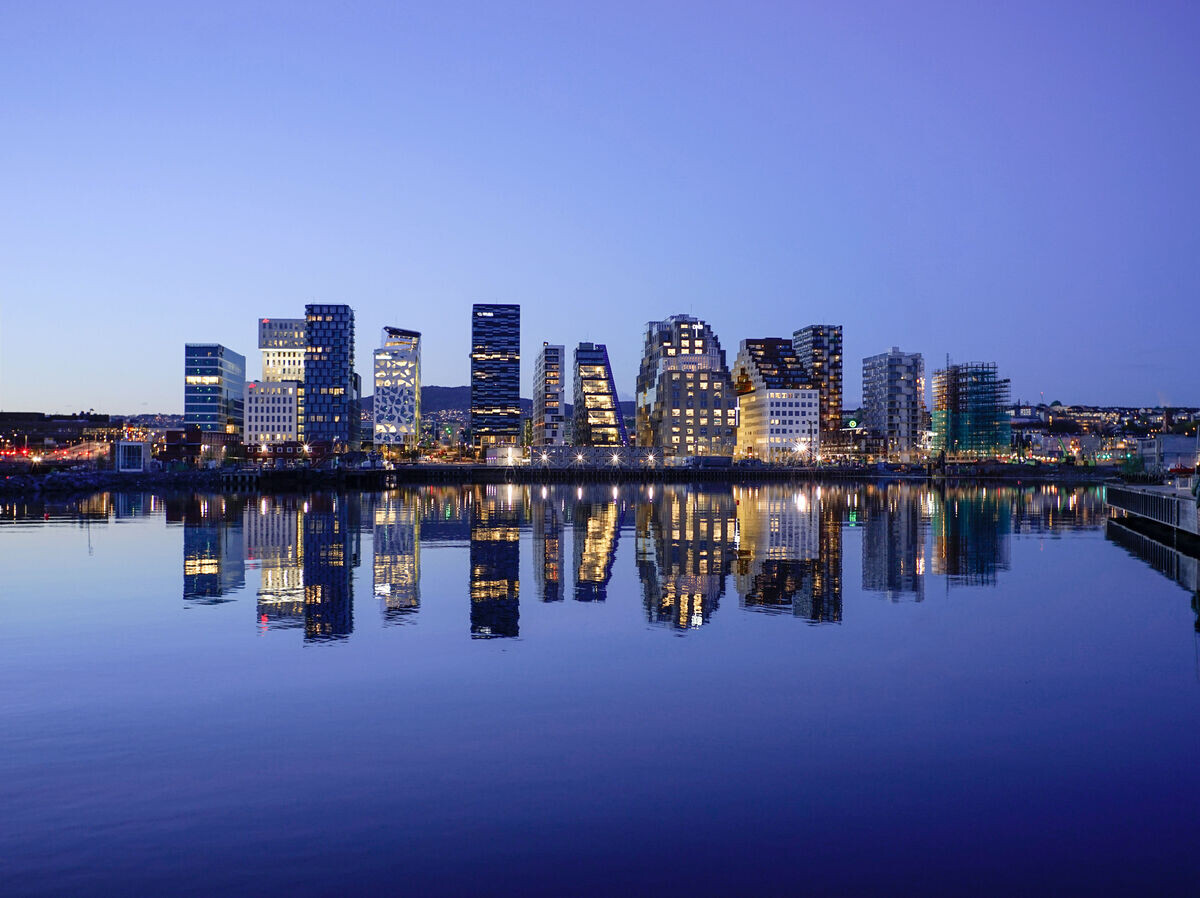
Via the winter sports resort of Oppdal, you reach the remote, barren mountain region of Dovrefjell. Incidentally, this is home to the only herd of musk oxen on the European mainland. The landscape becomes greener and gentler in Gudbrandsdalen, which leads you to Lillehammer. This charming little town became world-famous thanks to the 1994 Winter Olympics. Following the shores of Lake Mjøsa, the largest lake in the country, you reach the Norwegian capital. Oslo has been reinventing itself in recent years, with large parts of its former industrial and harbour areas transformed in innovative ways. Environmentally friendly architecture was a key priority in the new Vulkan district, while architecturally striking high-rise buildings were built in Bjorvika, near the opera house – the "Barcode". Oslo also boasts historic buildings well worth seeing – from Akershus Fortress to the Royal Palace. The rest of the day is free for you to explore the Norwegian capital. We would also be happy to include activities such as a visit to the Holmenkollen ski jump tower.
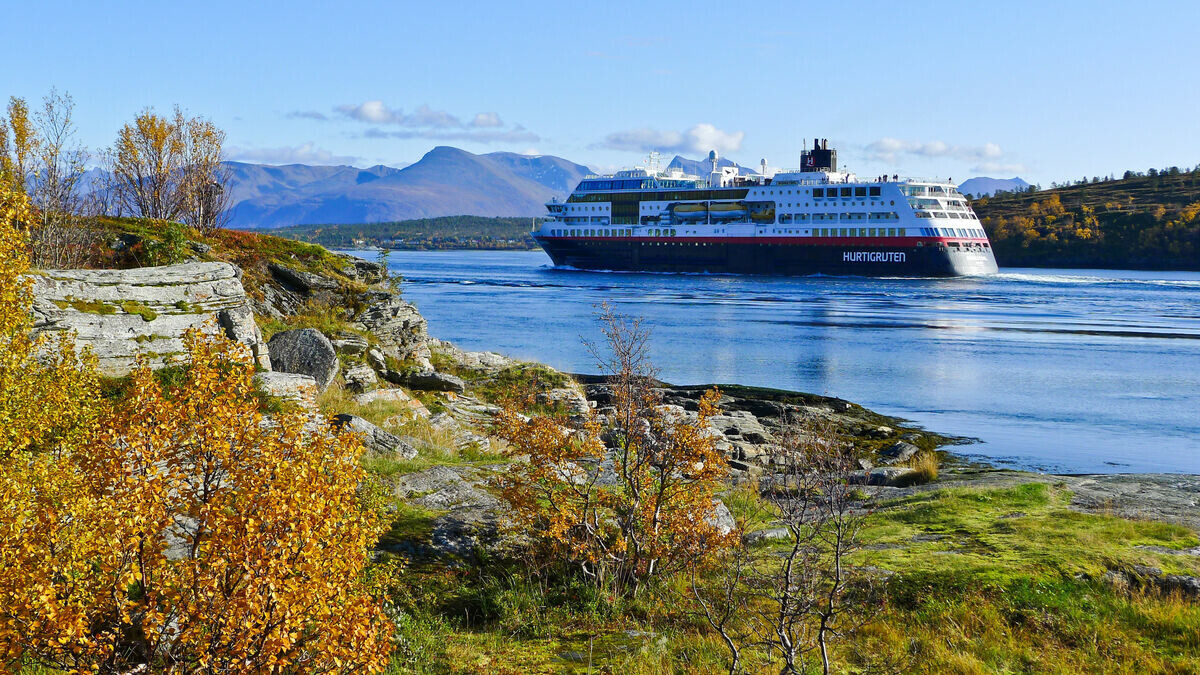
After breakfast, you have some free time to explore Oslo. How about a guided city tour of Oslo or a visit to one of its many museums (both optional)? You are expected at the ferry terminal around midday, and at 14.00 the Color Line ferry sets sail for Germany. From the sun deck, you can enjoy lovely views of the coast and the picturesque islands of the Oslofjord. There is also plenty to see on board – from the 120m-long promenade to the evening show programme (extra charge).
After the extensive breakfast buffet on board, the ship docks in Kiel at 10.00. It is then time for the final leg of your journey home. We look forward to welcoming you back to Scandinavia.
Our tip:
Would you like to include more winter activities? We would be delighted to arrange husky safaris or snowmobile tours if you extend your stay by a night. Or how about an extra night in Narvik and the chance to take the northern lights train, the Arctic Train, to Katterat northern lights camp and marvel at the northern lights in the great outdoors?
Important:
Please note that the package price only applies to certain departure dates. We would be happy to help you find a date offering the best value for you.
Included services
- Ferry crossings:
- Kiel – Gothenburg for coach and passengers
- Oslo – Kiel for coach and passengers
- 2 x buffet breakfast on board
- Accommodation in 2-berth cabins
- 1 x overnight stay including buffet breakfast
- 9 x overnight stay with half board
- Half board with a 3-course evening meal or buffet
- Good mid-range and upper mid-range hotels in the SRG classification
- 1 x 1,5 hrs reindeer farm visit near Umeå
- 1 x dinner under the Northern Lights near Umeå
- 1 x admission to ICEhotel Jukkasjärvi
- 1 x train journey Björkliden - Narvik class 2
- 1 x 3 hrs snowshoeing in the Lofoten Islands
When to travel
When is the best time to visit Norway?
Norway is appealing all year round, but climate and daylight vary considerably between the south, the fjord region and the Arctic north. The summer months are often ideal for touring holidays and fjord scenery; the darker months in the north offer opportunities to see the Northern Lights.
| Travel experience | JJan | FFeb | MMar | AApr | MMay | JJun | JJul | AAug | SSep | OOct | NNov | DDec |
|---|---|---|---|---|---|---|---|---|---|---|---|---|
| Fjord and scenic tours | – | – | – | – | suitable | suitable | suitable | suitable | suitable | – | – | – |
| Cities and culture | – | – | – | – | suitable | suitable | suitable | suitable | suitable | – | – | – |
| Coasts and the Lofoten Islands | – | – | – | – | – | suitable | suitable | suitable | suitable | – | – | – |
| Midnight sun in northern Norway | – | – | – | – | suitable | suitable | suitable | – | – | – | – | – |
| Northern Lights in northern Norway | suitable | suitable | suitable | – | – | – | – | – | suitable | suitable | suitable | suitable |
| Winter experiences in northern Norway | suitable | suitable | suitable | – | – | – | – | – | – | – | – | suitable |
| Alpine hikes | – | – | – | – | – | suitable | suitable | suitable | suitable | – | – | – |
For guidance only, with no guarantee of weather, dates or availability. Midnight sun from around late May to mid-July, depending on location; Northern Lights sightings are not guaranteed. Alpine hikes and accessibility depend on altitude, weather and local conditions. Find out more about Norway